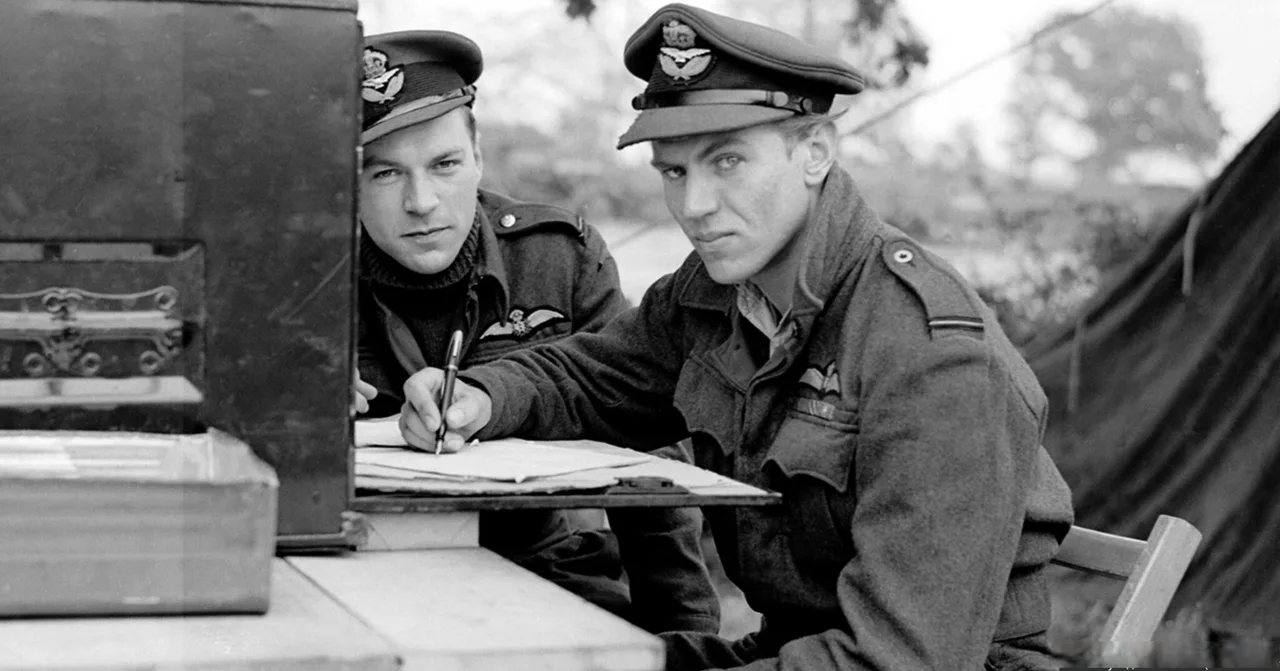
In just a few weeks of war, he shot down 27 enemy aircraft. George Burling was deeply religious, did not smoke or drink, avoided coarse language and had only an elementary education. But he was passionate about flying and shooting, and he admitted that he greatly enjoyed combining the two. A native of Montreal, George Burling became a ruthless killer in the cockpit of a Spitfire and Canada's most prolific ace of the Second World War. To learn more, visit montrealyes.com.
Early childhood
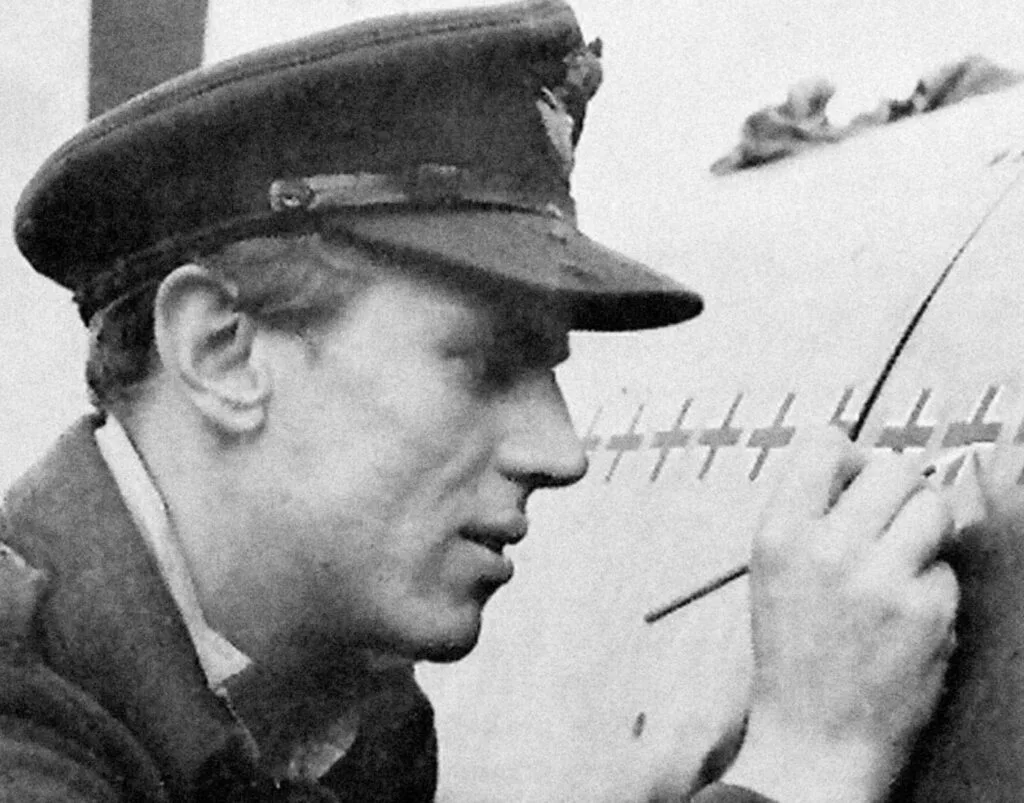
George Burling was born on December 6, 1921, in Montreal. He was the third of five children of Frédéric and Hetty Burling. His father came from Sweden and earned his living as a commercial artist, while his mother was born and raised in Montreal.
When the boy was six, his father built him a model airplane, and it had a great influence on George's destiny. He fell in love with aviation, began dreaming of flying, and it became his lifelong passion. As a child, he built and sold model aircraft and hunted wild birds to improve his marksmanship. He would later recall that he started shooting firearms at the age of 14. These were not necessarily firearms such as a .22-calibre pistol. It could have been a simple slingshot.
Meanwhile, his parents hoped that Berling would study at McGill University and follow in his father's footsteps as a commercial artist. But young Berling had his own plans for his life. So the young man left school at the age of 15 and found a job in order to earn more money and begin training as a pilot. A year later, he had already logged 150 flying hours and passed the exams for his commercial pilot's licence.
Later, to broaden his flying experience, he decided to go to China and join the Chinese Nationalist Air Force. His plan was to travel to San Francisco and then on to China, where he would find a job and, once settled, join the army. Unfortunately for Berling, he was arrested at the border as an immigrant and sent back to Canada.
The start of the Second World War
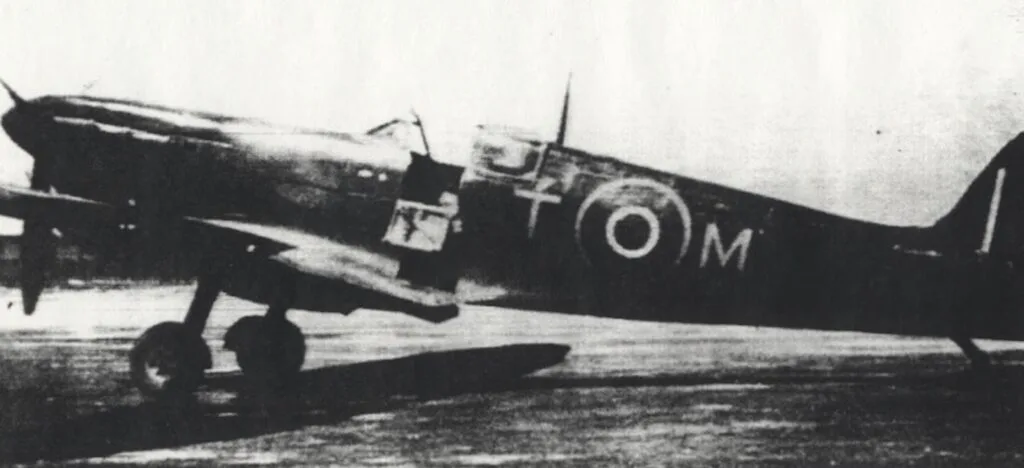
When the Second World War broke out in 1939, Berling tried to join the Royal Canadian Air Force, but his application was rejected. Without hesitation, he boarded a merchant ship, crossed the Atlantic and went to England to enlist. But there, too, his application was at first rejected because he lacked the proper documents. Berling did not give up. He crossed the Atlantic again to return home to Montreal, obtained the necessary papers, then went back to England, where he was finally accepted into the air force.
From the very beginning, Berling showed his character by disobeying an order during a flight over France. He simply left his squadron. But he had broken away to attack an enemy aircraft, which he went on to shoot down. Despite his victory in that fight, the squadron commander condemned him for his inability to "work as part of a team", after which "Buzz" volunteered for a posting outside England to escape punishment and further trouble. He was soon sent to Malta, where he arrived on June 9, 1942, to serve with No. 249 Squadron of the Royal Air Force.
Posting to Malta
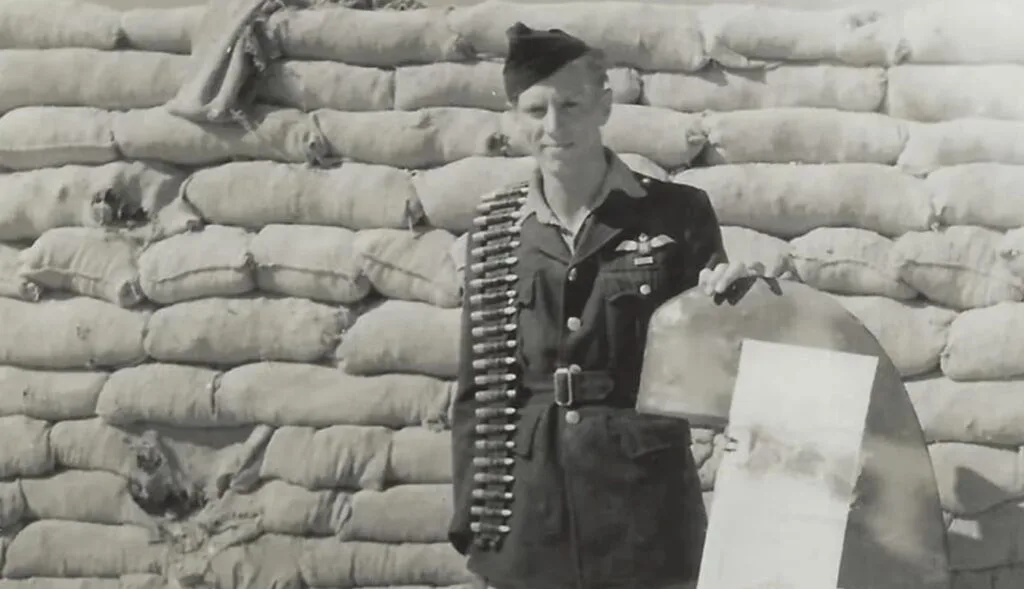
In the summer of 1942, Malta, a small island in the Mediterranean located 80 kilometres south of Sicily, was being heavily bombed by the enemy. The island was of strategic importance because it was controlled by the Allies. Its value had grown considerably after the North African front opened in 1940. The island gave the Allies an excellent platform for attacking sea, land and air targets in the central Mediterranean. That is precisely why it was besieged for nearly two and a half years.
As in the Battle of Britain, fighter pilots became the backbone of Malta's defence. But there was one important difference. In Britain, after an air battle, pilots could retreat to a cosy pub, go home to bed with their wives or spend their free time at shows in London's theatre district. On Malta, the work was hot, dusty, dangerous, lonely and relentless, and hardship had become a way of life.
Day after day, month after month, young men, often only a little over 20, took to the skies to stop the German and Italian bombers trying to destroy the island and its people. The Canadians of the Royal Canadian Air Force did not merely take part in this battle; they were its spearhead. What is more, several of them earned a place of honour in the pantheon of the great aces of Malta and, in fact, of the entire war.
Pilot George "Buzz" Burling, who arrived on Malta on the eve of the battle for the island, was already an experienced pilot and was one of them. Within a few weeks, he shot down 27 enemy aircraft. It is worth noting that George was a deeply religious man: he did not smoke, did not drink alcohol and avoided coarse language, even though he had only an elementary education.
But he was obsessed with flying and with destroying enemy aircraft. He became Canada's most famous military hero of 1943. The public knew him as "Buzz" Berling, but his fellow pilots called him "The Nutcase". This was because, when the adrenaline was pumping, he kept repeating the phrase "Damn nutcases". The nickname stuck with him throughout his military career.
Once settled at his new base, Berling, as a member of the squadron, flew his first operation the very next day. Together with his comrades, he won a victory over Malta on July 6, when massive raids on the island began early in the morning. The Luftwaffe and the Royal Air Force were both out in full force over Malta, and every fighter squadron took to the air to defend the island.
Eight Spitfires of the 249 aircraft were scrambled and took off to meet a large number of bombers, which were themselves escorted by fighters. In fierce combat, Berling managed to shoot down a Macchi 202, and then another two minutes later. After landing to refuel and rearm, he took off again and this time shot down a Bf109 and damaged a Cant Z1007.
Berling was a lone wolf, constantly criticized for his breaches of discipline. Discipline and obeying orders were never his strong points. Only his public image as an ace and a hero protected him from military justice.
An antagonistic alter ego
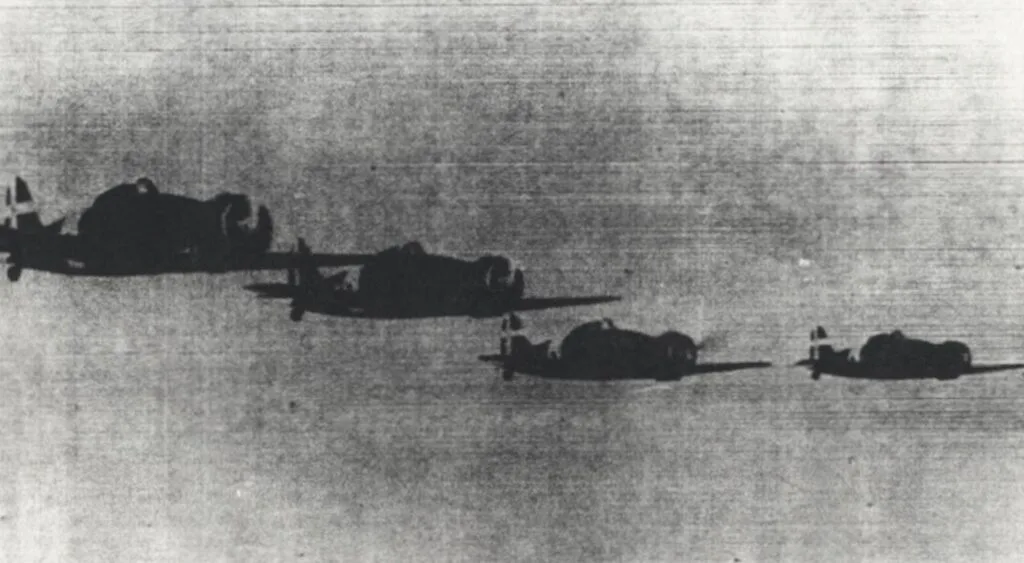
Beyond his skills as a pilot and his puritan habits, Berling had a hot-tempered, arrogant and antagonistic alter ego. His fellow pilot Hugh Godfrey described him as a tall, slim man with tousled blond hair, angular features and deep dimples in each cheek.
He had large, ice-blue eyes. All his comrades knew that George Burling was very hot-tempered, bold and outspoken: a classic rebel, in other words. Berling had refused promotion several times, and when he was finally ordered to accept the rank of flight lieutenant, he insisted on continuing to live in the sergeants' quarters.
But his main flaw was that he could not stop himself from performing dangerous aerobatics. Eventually, right here on Malta, his aircraft was shot down in combat; Georges bailed out and was hospitalized.
The "screwball" Berling became a legend on the island of Malta, and a small corner of the National War Museum, housed in Fort St. Elmo in Valletta, is dedicated to his memory.
Sources:
- https://www.historynet.com/screwball-beurling-the-falcon-of-malta/
- https://www.maltaaviationmuseum.com/2024/02/06/george-f-screwball-beurling-a-malta-hero/
- https://montrealyes.com/wp-admin/post.php?post=7504&action=edit&lang=uk