The airport later served as an airmail hub. However, the outbreak of the Second World War radically changed the role of Saint-Hubert Airport. It became an important military base and training centre, before being privatized and becoming Montreal's airport. For more details, visit montrealyes.com.
The first mooring
The origins of the local airport go back to 1926, when British experts chose Saint-Hubert as the site for its construction. The British had a simple goal and concrete plans: to develop commercial air links between the members of the British Empire. These included countries such as India, Australia, Canada and others.
The Saint-Hubert area was relatively flat and not very sandy, which suited both the landing of aircraft and the mooring of large English airships. Moreover, airships were a priority in these activities. At the time, it was believed that airships would very soon replace all other means of long-distance transportation, for example between Great Britain and Canada.
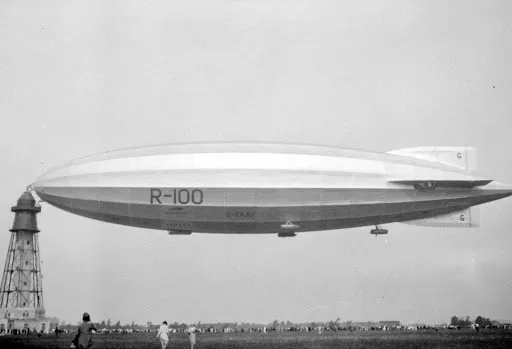
What's more, in the summer of 1930, the first airship, the R-100, successfully landed and moored here. It crossed the Atlantic and arrived at a special mast built here at the expense of the Canadian government. At the time, this was an event of national importance. It is known that at least 40,000 spectators came to Saint-Hubert to witness it. People came not only from Montreal but from all over Canada. Who would not want to witness a historic event, especially since great hopes were then being placed in airships?
The event was so important and meaningful that more than 600 military personnel provided security around Saint-Hubert. The mast to which the R-100 was to moor was 60 metres high. It is known that the aircraft, which set out from England, travelled nearly 4,000 miles, covering this distance in a little over three days. The craft was in the air for nearly 80 hours.
After the mooring and all the ceremonies that followed, the airship stayed in Saint-Hubert for two weeks. This drew more than 500,000 curious spectators, 3,000 of whom were even able to go aboard the craft to tour its interior. It is known that after its stop in Saint-Hubert, the R-100 airship went on to Toronto, where an equally exciting welcome awaited it.
These flights were experimental in nature, as the builders of this R-100 airship in particular, as well as of others, hoped that they would soon be in regular use. The craft were then to provide a link between Montreal and England, carrying passengers and goods from Europe to Canada. Plans had even already been drawn up for the schedule: one flight a week was planned. But the technical problems that came with airships prevented these plans from being carried out. As is well known, they flew using hydrogen.
However, Saint-Hubert Airport, near Montreal, continued to operate for the Canadian government as an airmail service. Delivering mail by air was much faster. The airmail service, which operated in the Mauricie, Côte-Nord and Abitibi regions, was extended to the Montreal region. From then on, mail from Europe, which arrived by ship at Pointe-à-Pér, near Rimouski, was carried by air to Saint-Hubert. The airport thus became an integral part of the Trans-Canada mail route, which included cities such as Ottawa and Toronto.
The start of the Second World War
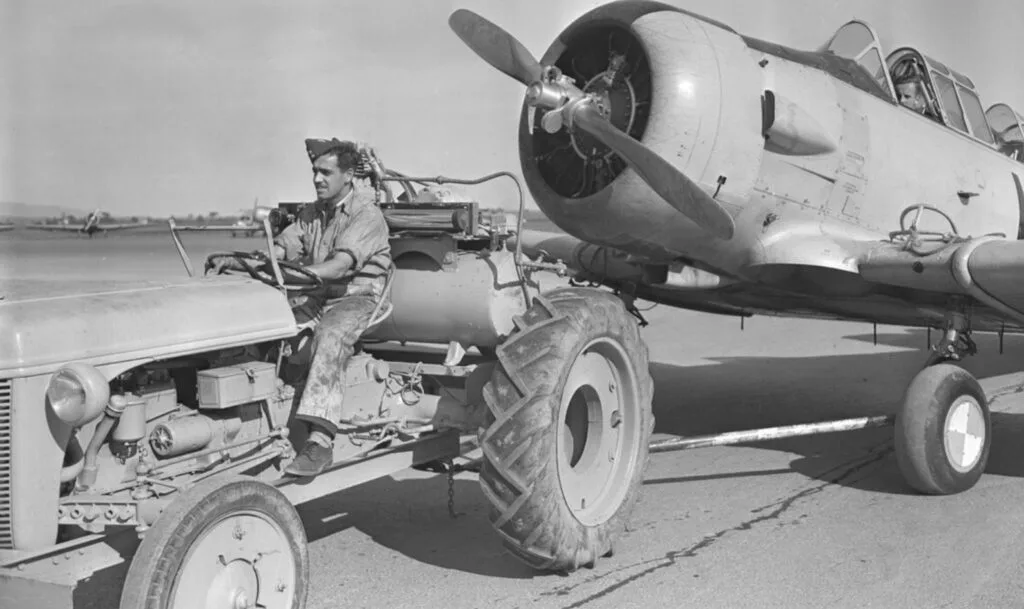
The Second World War had a considerable impact on the Saint-Hubert airfield. In 1941, the airport became a military base. Like every other airport in Canada, it was converted into a military flying school. Special buildings were put up around the airport to house future pilots from Commonwealth countries.
Overall, this extraordinary initiative to train more than 131,000 Canadian and Allied aircrew during the Second World War was a project of national scope. It drew on airfields, schools and other training establishments, some of which were built from scratch, while others, like Saint-Hubert, were upgraded from existing facilities.
Every Canadian province took part in the project except Newfoundland and Labrador, which was not yet a Canadian province at the time. In the end, thanks to the British Commonwealth Air Training Plan, nearly 200 training and support establishments were created in nearly 150 communities.
As for Saint-Hubert, the order to create the school was given on July 25, 1941. The flying school opened at the airfield on September 1, 1941. Pilots who had just completed elementary flying school were admitted to the training.
At Saint-Hubert, they received in-depth training on multi-engine aircraft, after which the now-trained pilots were assigned according to their future role: fighters or bombers.
Training aircraft
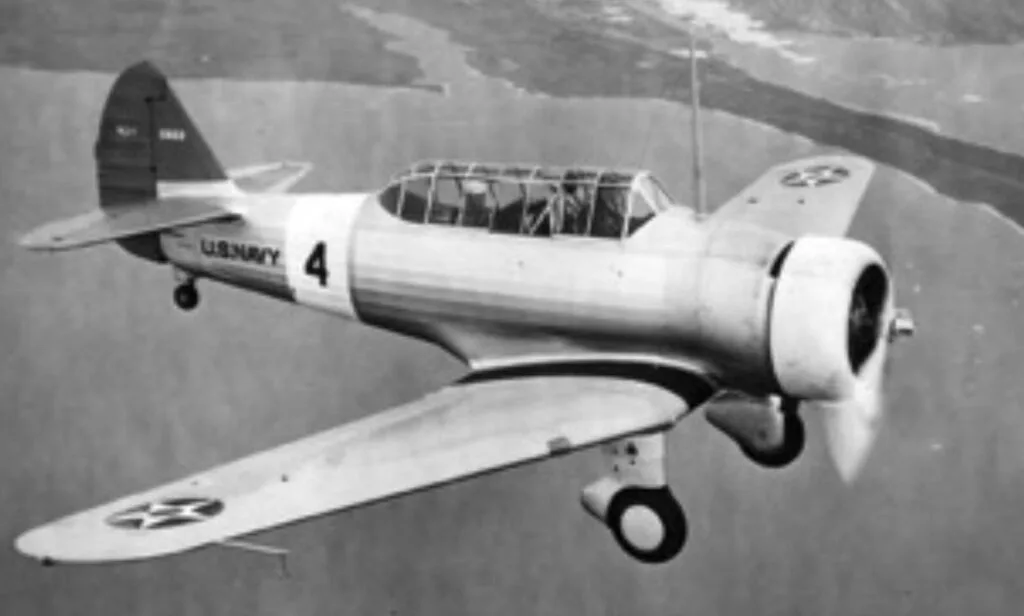
At Saint-Hubert, training was done mainly on T-6 Texan aircraft, built by North American Aviation. These training models were considered highly complex machines. The T-6 Texan was an advanced single-engine American trainer, also used to train pilots for the US Army Air Forces and the US Navy.
Later, these aircraft models were adopted by the Royal Canadian Air Force and other British Commonwealth countries to train pilots during the Second World War. Designed by North American Aviation, the T-6 is known by different names depending on the model and the air force that flew it.
Interestingly, the T-6 Texan has remained a popular combat aircraft model and is currently used for demonstration flights at air shows and other events. This model is also used to imitate various historic aircraft, such as the Japanese Mitsubishi A6M Zero. In all, nearly 15,500 T-6 Texans were built.
The airport's recent history

At its peak as an operational air force base, Saint-Hubert was home to several jet fighter squadrons. They flew missions in models such as the de Havilland Vampire and later the CF-100. Two reserve Sabre squadrons of the Royal Canadian Air Force and two squadrons of multi-engine transport aircraft were also based there.
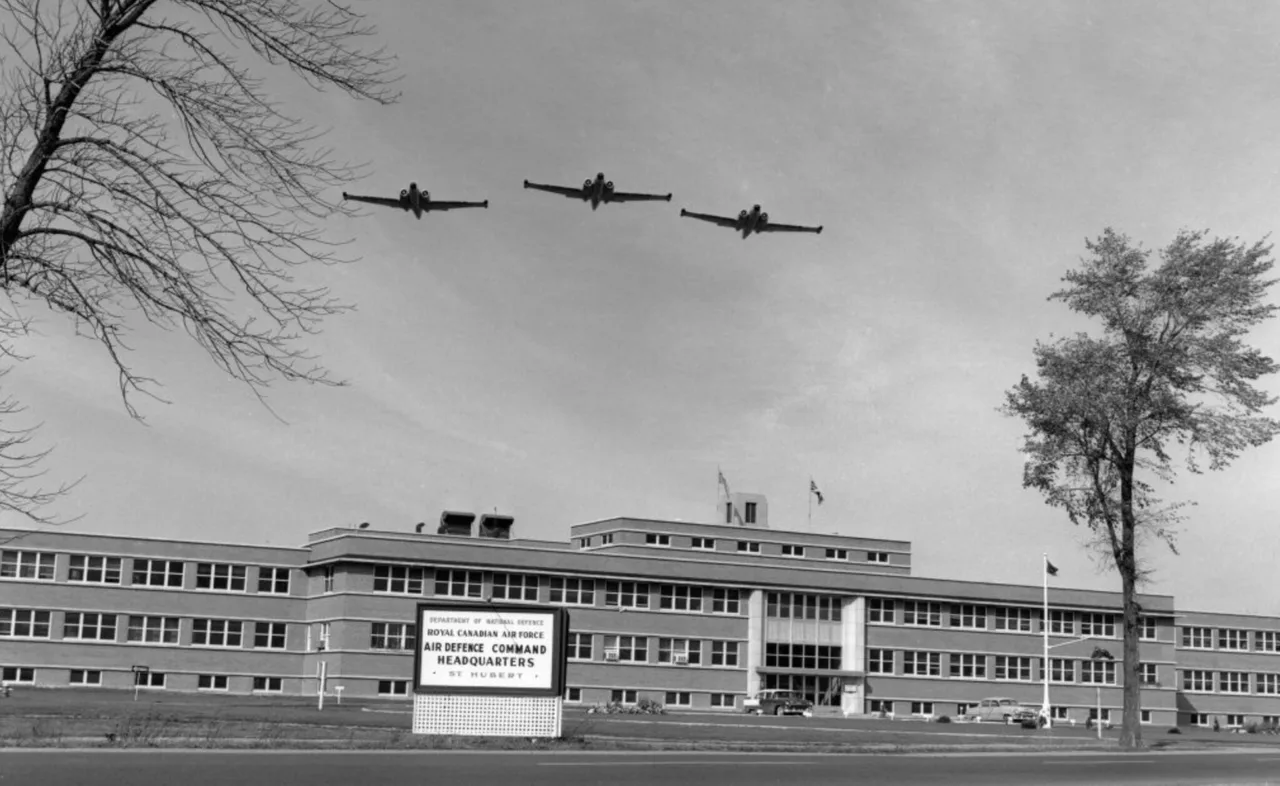
In addition, Saint-Hubert housed the headquarters of the Canadian Air Force's Air Defence Command, which today serves as the headquarters of Mobile Command. In the 1990s, the Canadian Armed Forces decommissioned the main base and reduced it to the size of a garrison.
However, Saint-Hubert is still used as a Montreal airport. Even the residential area where civilian spouses now live remains under military control. Admittedly, several buildings were transferred to the city to house police and municipal offices. Likewise, several hangars have been converted and now serve as film studios. The remaining barracks and mess halls have been turned into commercial premises or demolished.
Sources:
- https://rcaf.info/rcaf-stations/quebec-rcaf-stations/rcaf-station-st-hubert/
- https://www.t6harvard.com/harvard-types/t6-harvard-history-t6-texan-the-pilot-maker-canadian-car-and-foundry-t6/
- https://www.canada.ca/en/air-force/services/history-heritage/british-commonwealth-air-training-plan/training-establishments.html