The 1920s in Montreal marked that delicate but fascinating moment when the "good old" telegraph machine was still trying to save face, while the telephone was already firmly taking over. The city, which for decades had listened to the rhythmic clicking of telegraph keys, suddenly started talking, quite literally a lot and all at once. It was a time when privacy ended where the shared telephone line began, and when news travelled faster than the morning coffee.
At that time, the post office found itself in an unusual position: it was no longer the only window open to the world, but it had not yet become a delivery service. It all began in the early 18th century with Pedro da Silva, who was simply called "the Portuguese". He carried the mail between Quebec City and Montreal by boat and on horseback, doing his best to keep the news from going stale before it even reached its destination.
How the city learned to live in an "always connected" world, and why "the Portuguese" would have a hard time recognizing today's post office: all the details are waiting for you at montrealyes.com.
The Montreal post office: a well-oiled machine
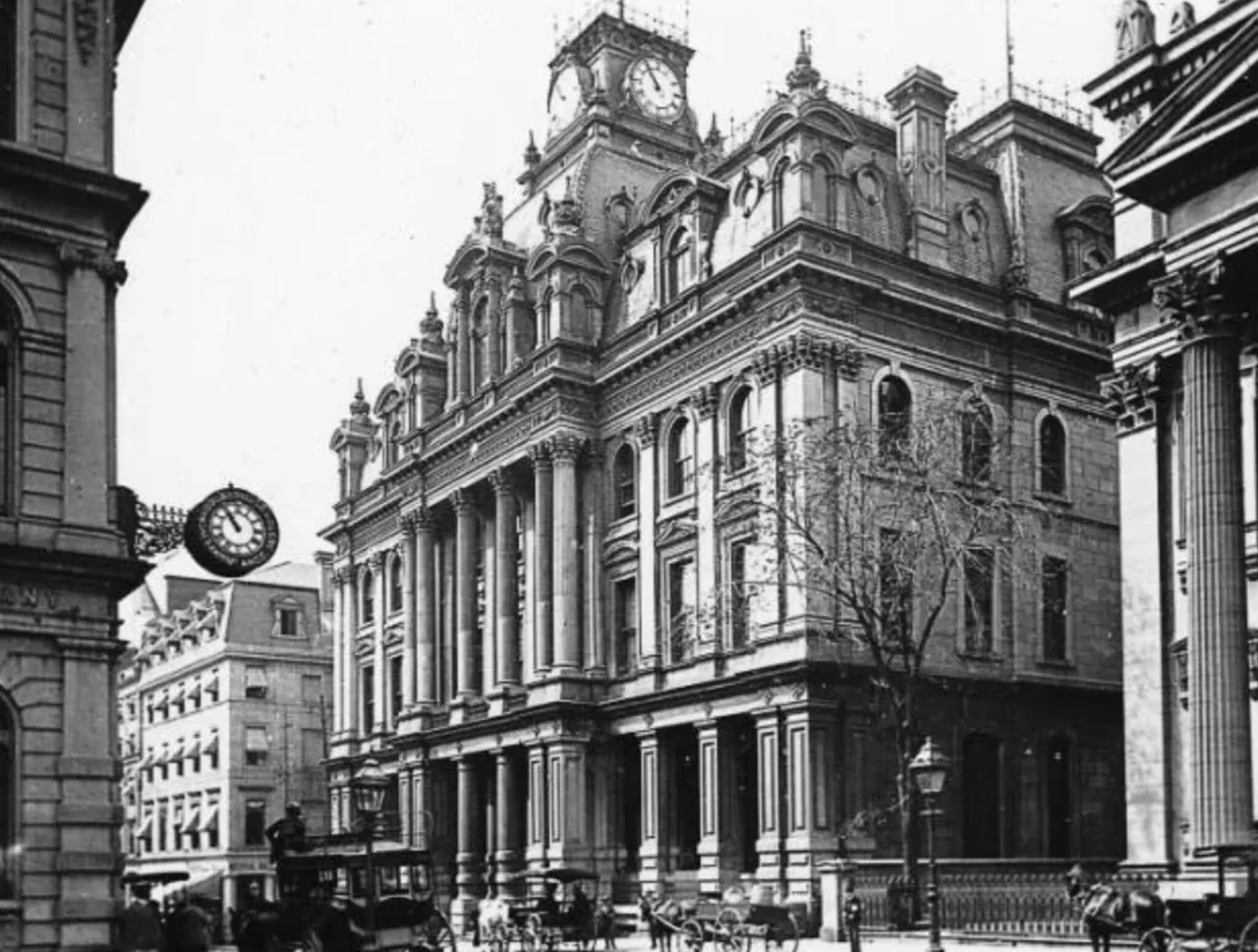
By the 1920s, the post office in Montreal no longer looked like a patchwork network of couriers and offices, but like a well-oiled machine with a clear hierarchy. It was run by the federal Post Office Department, a body that set the rates, routes and rules of the game for the whole country. Within this system, Montreal was not just a city but a key hub: a major port, railway lines, a transit point for mail between Europe and Canada. The main post office building on Saint-James Street deserves a special mention: a true temple of the postal service in its day.
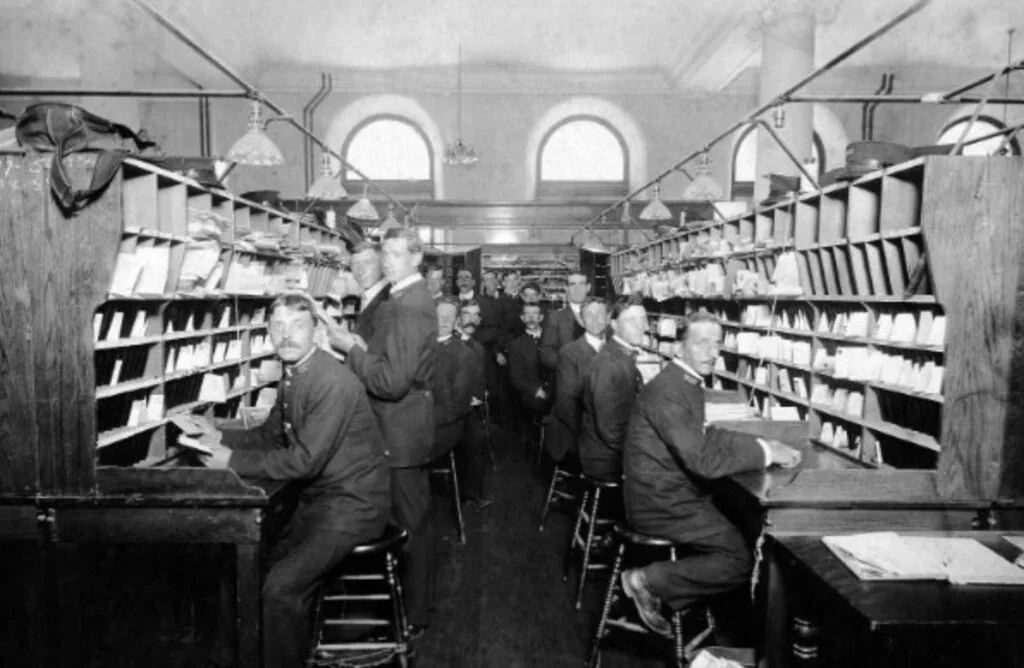
The city was home to large postal sorting centres located near Windsor Station, through which thousands of letters, parcels and, above all, telegrams passed every day.
The postal infrastructure rested on three pillars: post offices, railway lines for fast transport and telegraph stations, which until recently had been the heart of communications. It was the telegraph that, in the preceding decades, offered a speed traditional mail could not match: short messages, called "yellow flashes" because of the colour of the forms, were transmitted in a matter of minutes, and businesses had grown used to relying on them. But in the 1920s, things began to change.
The telephone, which at first seemed a luxury, gradually became the new norm. Unlike the telegraph, it did not require you to encode your thoughts into short signals; you could speak directly, quickly and without an intermediary. It is no coincidence that, as early as the 1920s, Canada was among the countries with the most telephones per capita. And the post office, which only yesterday had been at the heart of this system, had to adapt to this new reality.
In those same years, a new player appeared: airmail. For the time being, it could not compete with trains or ships in terms of volume, but it won hands down on speed. The first regular flights were only just mapping out routes; letters were reaching places that had previously taken several days to get to, and that fact alone seemed almost miraculous. For Montreal, with its port and its role as a transit city, this meant a new pace of life, almost without delays.
The "killer" of the Montreal telegraph
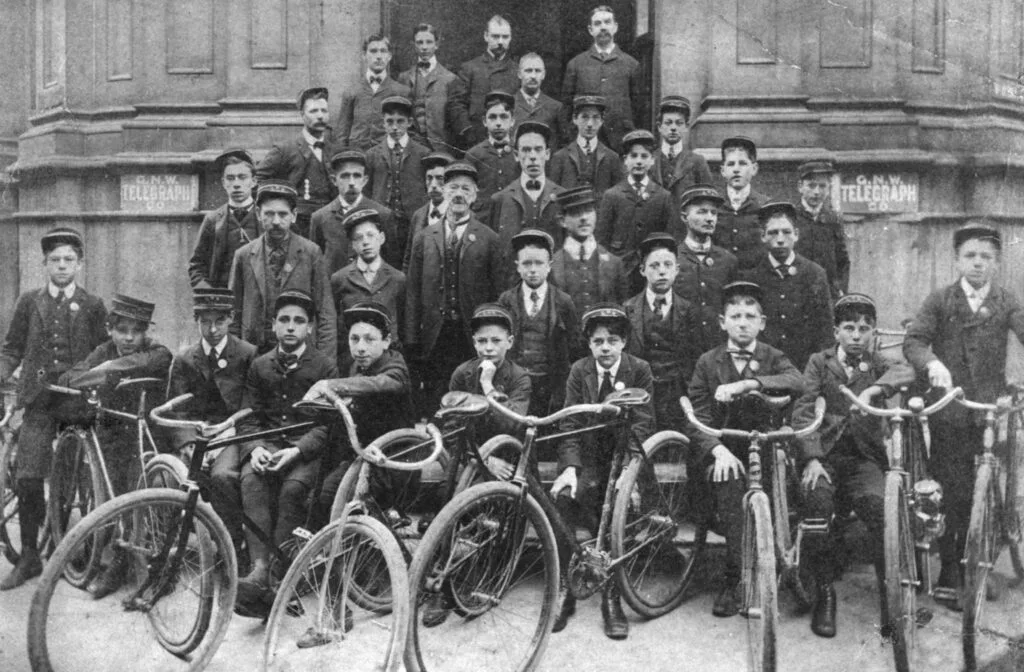
In Montreal, the telephone did not arrive as a revolution, but as an expensive toy for businesses. At the end of the 19th century, the first lines connected banks, offices and railway companies: those for whom speed already came at a price back then. It was Bell Canada that was in charge of developing the network; it methodically covered the city in cables, making the voice the new currency of communication.
At first, the telephone was a privilege: the devices were expensive, calls went through operators, and conversations were short and strictly business. But by the 1910s and 1920s, things began to change. The network expanded, new subscribers came on board, and with them a new culture of communication. People were learning not to write, but to talk; not to wait for an answer, but to get it right away.
"Party lines", telephone lines shared between several households, were a case apart. Privacy on them was relative: not only could the neighbours hear the ring, but they sometimes witnessed other people's conversations. On the other hand, the telephone was becoming more affordable, and that is precisely what helped it spread.
The city's bilingualism also played a role: the switchboard operators had to be true linguistic acrobats, switching instantly between French and English.
Technology did not stand still either. Manual exchanges, where operators connected subscribers to one another, gradually disappeared, giving way to automatic exchanges. That meant less waiting, more speed and less "human intervention" in the conversation itself. The telephone, once a marvel, became an everyday object.
In the 1920s, the city was already living to the rhythm of a new era: phone calls had replaced telegrams, and the voice had taken over from code. The telegraph had not yet disappeared, but it was starting to look outdated: reliable, to be sure, but slower and less flexible. And while the post office was still trying to strike a balance between the old and the new, the telephone was not looking for that balance: it simply took its place.
The economics of the Montreal post office
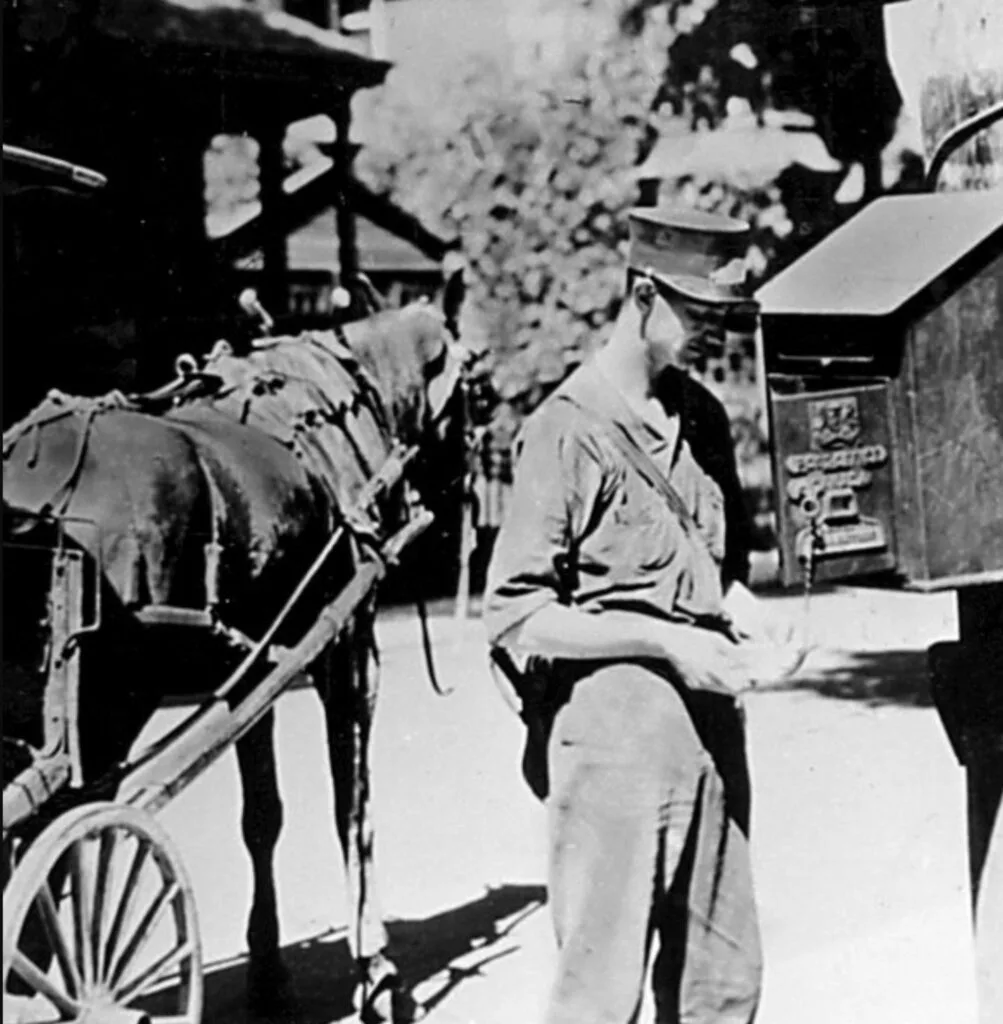
Despite technological progress, the post office in Montreal remained not only a communications infrastructure, but also an instrument of control and economic stability. The system operated under the close supervision of the federal Post Office Department, which regulated not only routes and rates, but the very logic of access to communications. In effect, the state determined who could speak, write or send messages, how, and at what price.
During the war and the postwar period, the practice of monitoring correspondence continued, and some telegrams were subject to administrative surveillance. It was a time when the speed of communication had already increased, but the trust placed in it was still under state control.
At the same time, the post office performed an entirely mundane but crucially important function: a financial one. It effectively became a "neighbourhood bank" for those who had no bank account or no access to financial institutions. Postal transfers and money orders were a simple, accessible alternative to banking.
Workers, migrants and small shopkeepers could send money through post offices quickly, relatively safely and without complicated formalities. In this sense, the post office was becoming an essential financial infrastructure of everyday life.
Economically, the system ran in balance: the state invested in developing the network, large cities like Montreal provided the volume and turnover, and the rates partly offset the costs. Telegraph and telephone services generated increasingly large revenues, while ordinary mail remained the mass-volume but less profitable backbone of the whole system.
And it was precisely in this balance, between control and services, between the state and the market, that the post office gradually lost its role as the main player, while long remaining the invisible framework of city life.
"The Portuguese" would have been pleased
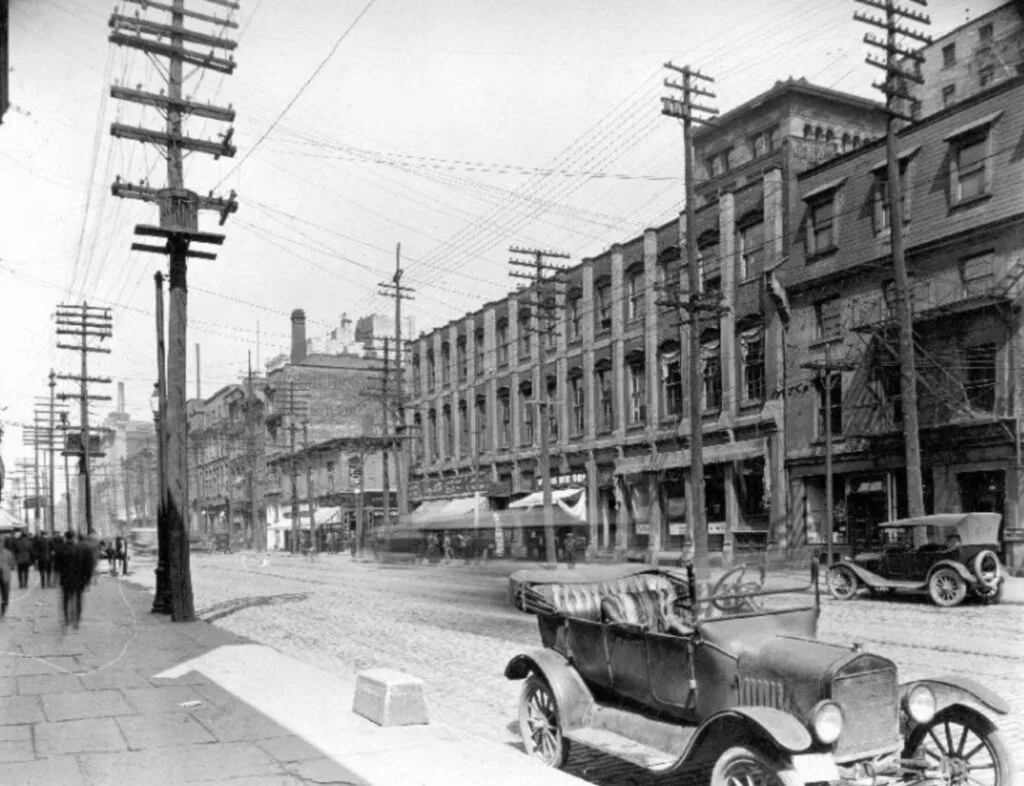
To sum up, the Montreal post office did not disappear with the era of telegraph cables and the first telephone lines: it simply changed form, while remaining an essential part of the city's rhythm. Today, it could not function without airmail, which has made fast delivery an almost unnoticeable part of everyday life.
And if we imagine the first letter carrier, nicknamed "the Portuguese", seeing this system today, he probably would not recognize it at first glance. But he would surely be delighted: the cause to which he devoted his life, carrying letters and parcels between Quebec City and Montreal first by boat and then on horseback, has turned into a fast, uninterrupted machine. To this day, it connects people and cities, without the long waits that once seemed normal.
Sources:
- https://pacmusee.qc.ca/en/press-room/press-releases/talking-about-the-evolution-of-communications-through-telephony/
- https://www.mhs.mb.ca/docs/transactions/3/postalhistory.shtml
- https://www.rcinet.ca/en/2015/12/01/history-december-1-1919-the-first-official-radio-station/
- https://www.icao.int/sites/default/files/postalhistory/the_site_of_the_interim_organization.htm