Corruption is a thankless business: today you are "solving problems", and tomorrow you are explaining them to investigators from the Charbonnier Commission. Your reputation then vanishes faster than public money from suspicious calls for tender. You would think the risks are obvious: of the political career of Mayor Gérald Tremblay, all that is ultimately left is a biography with a note about his resignation, while the resounding accusations remained etched in the city's chronicle for a long time.
But the temptation to live "better than your salary allows" somehow won out over common sense among some of Montreal's elected officials. For more details on the resounding corruption scandal that shook the city, head over to montrealyes.com.
Political corruption as such
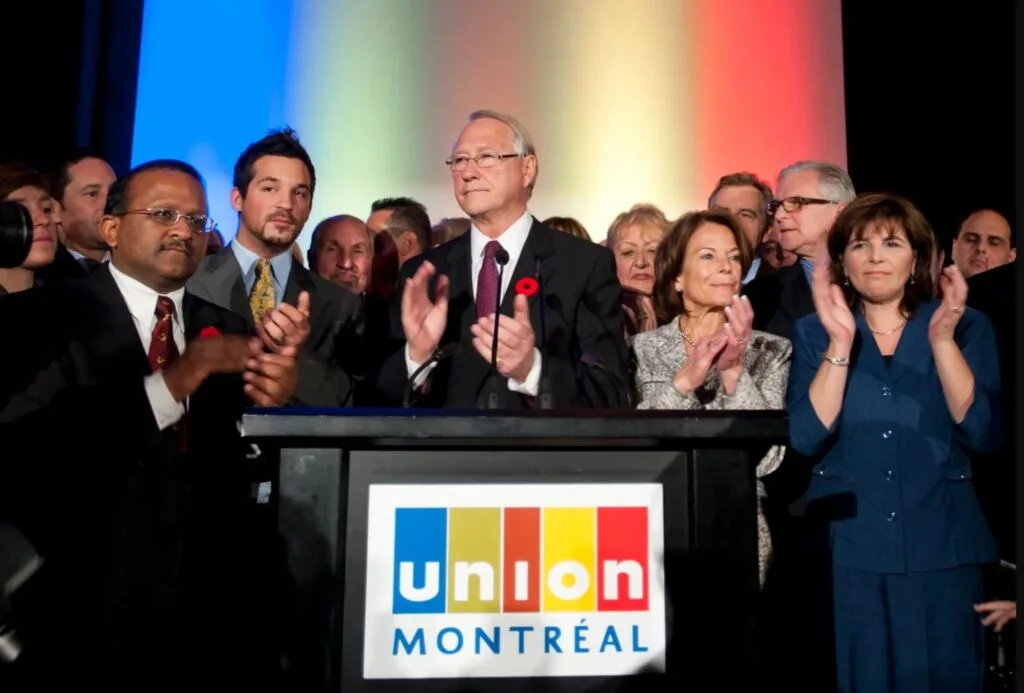
Corruption is usually mentioned with a pointed turn of phrase, as if to say that it exists somewhere out there, in political science textbooks and in news about "troubled countries". But reality keeps showing that corruption thrives even in thoroughly developed states; it simply knows how to stay out of the headlines, up to a certain point.
Sometimes, of course, the system breaks down, and that is when things get really interesting. In the United States, it happened during the Watergate scandal, when the whole political kitchen was suddenly thrust into the spotlight, and with it some not very appetizing ingredients. In Italy, in the 1990s, the "Mani pulite" affair looked like a big spring cleaning, at the end of which it turned out that not only the rubbish had to be thrown out, but also part of the furniture, along with the political system.
Canada, despite its reputation as a calm and predictable country, did not escape this phenomenon either. In the early 2010s, many questions piled up in Quebec about how public and municipal contracts were being awarded. Suspicions of collusion, strange favouritism towards "their own" contractors and hints of links to the criminal underworld could no longer be put down to chance or misunderstandings.
At some point, it became clear that public scrutiny was inevitable. That is exactly what investigative journalists do. After all, it is their job. In addition, a special commission was set up in 2011. Everything was done to find the culprits and understand how exactly this whole system of arrangements worked.
The man at the top of the system

If the testimony gathered over years of hearings at the Charbonneau Commission is to be believed, the corruption system in Montreal looked more like a well-oiled machine than an accidental malfunction. Construction companies won contracts worth millions of dollars through simulated competition, where the winner was often known before the process had even begun. In return, part of the money, usually as fixed percentages, was paid back as kickbacks or political financing to related structures, notably those revolving around Union Montréal.
According to those involved in these practices, the money followed entirely predictable, though carefully concealed, routes. This financial logistics did not lack "creativity": fictitious consulting services, inflated invoices and cash handed over through intermediaries in envelopes or sports bags.
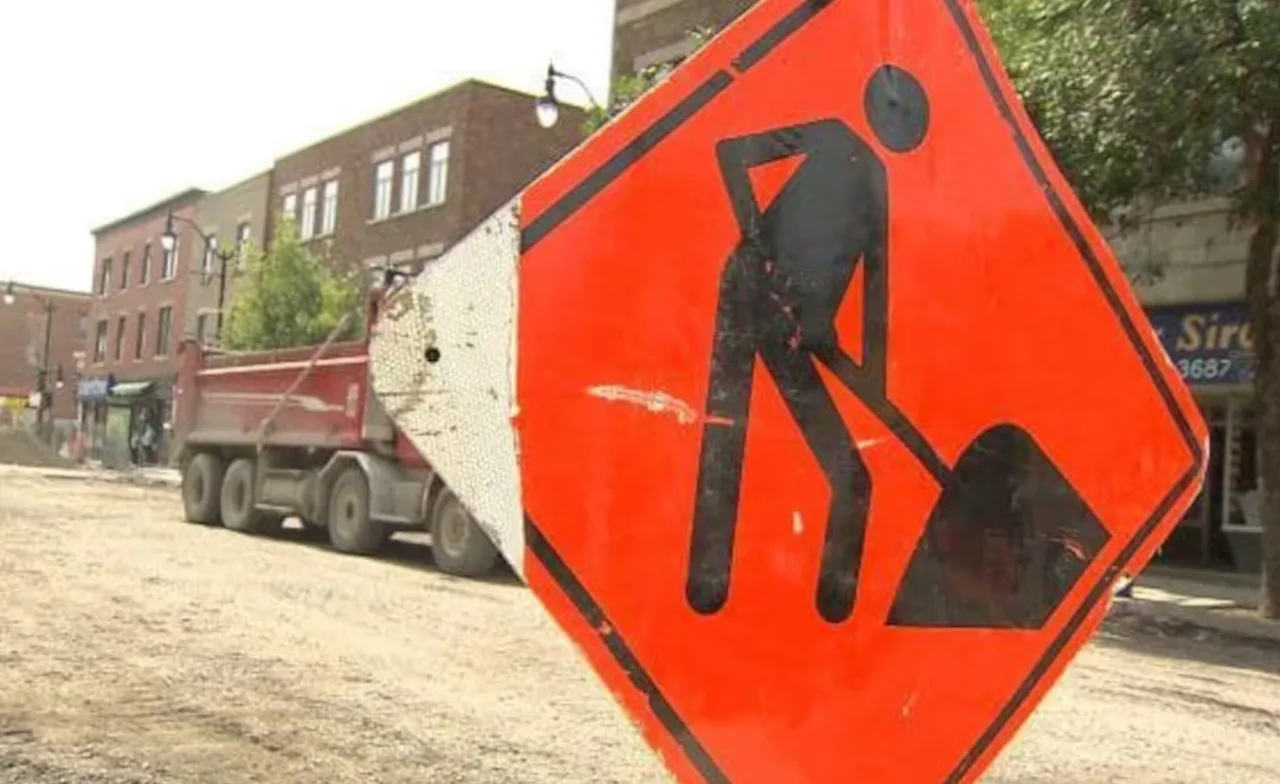
For years, all of this was presented as ordinary political practice, where companies' loyalty to those in power quietly translated into wins in calls for tender. At the same time, the cost of these arrangements was borne by residents, notably through infrastructure work being priced higher than in other regions.
Gérald Tremblay himself seemed, in this hierarchy, to be more of a person at the top of the system who either did not see the full picture or showed no particular desire to change it. He always denied any personal involvement in illegal schemes, but the testimony gathered during the investigation and public pressure gradually narrowed the political space he had left. In 2012, his long career as mayor ended with his resignation.
Alongside politicians, the Commission's documents named representatives of large construction companies, union leaders and "intermediaries": people who served as the link between the different levels of this system. It was precisely this network of informal arrangements that the whole structure rested on.
In the end, the problem lay not only in isolated cases, but in the fact that they gradually came to be seen as part of "the normal order of things". For Montreal, this resulted not only in a resounding scandal, but also in a forced overhaul of the rules of municipal administration.
So even the most closed systems sooner or later end up showing cracks. In Montreal, this process did not begin in prosecutors' offices, but with a series of investigative reports, notably the program Enquête on Radio-Canada, which brought to light anomalies in municipal calls for tender. It turned out that, for years, the same companies had always been winning contracts in the city, and that the formal competition often looked like a script agreed in advance.
Charbonnel Commission
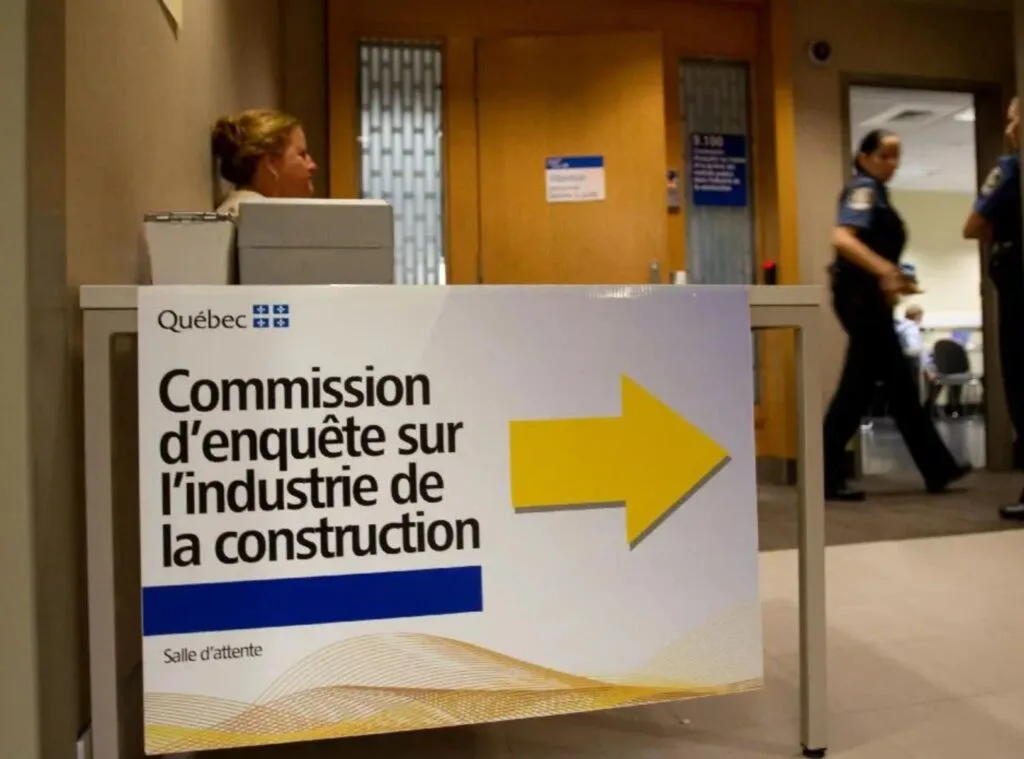
Once journalists brought the affair to light, those who were part of the system also spoke up. Contractors and players in the construction industry began describing the hidden practices of financial contributions and informal arrangements, under which access to big contracts often required tacit "approval". Among the key figures who later cooperated with the investigation was Lino Zambito, one of the representatives of the construction industry, whose testimony helped shed light on the inner logic of these processes. It was at that point that certain pieces began to come together into a whole: from the sharing out of contracts to the mechanisms of political financing.
When the volume of documents gathered reached a critical mass, the Quebec government could no longer settle for one-off checks. In 2011, the Charbonneau Commission was created: a public commission of inquiry tasked with examining corruption in the construction industry and the financing of political parties. At the same time, UPAC (Unité permanente anticorruption) began working actively, analyzing financial flows and the links between companies and municipal authorities.
The investigation was not a quick knockout punch. It was a long process, punctuated by dozens of public hearings broadcast live, which gradually made it possible to piece together a complete picture of the situation. Each new wave of information revealed a new level of connections, and what had until recently seemed like isolated episodes turned into a structured system.
Investigative journalism
The scale of the financial losses revealed during the hearings turned out to be far greater than early estimates had suggested. Although the Charbonneau Commission did not establish a final figure for the losses, testimony from experts and parties to the proceedings revealed a systematic pattern: construction contracts in Montreal cost 20 to 30% more than the market price. Across the metropolis, that meant hundreds of millions of dollars in extra costs every year and losses running into the billions over the long term.
This complex puzzle could not have been put together without the role played by investigative journalism. It was journalists at Radio-Canada and La Presse who were the first to systematically expose anomalies in municipal public contracts and draw public attention to them. Later, other media joined the investigations, including the English-language press, which increased public pressure and made the subject impossible for the authorities to ignore.
In the end, it was precisely the combination of journalistic work, insider testimony and the official inquiry of the Charbonneau Commission that made it possible to gradually dismantle a system long considered untouchable. Montreal's story became a striking illustration of how even the most deeply entrenched systems start to crumble when silence gives way to public questions and fact-checking.
Sources:
- https://www.cbc.ca/news/canada/montreal/charbonneau-corruption-inquiry-findings-released-1.3331577
- https://montrealgazette.com/news/the-5-ws-of-the-charbonneau-commission/
- https://globalnews.ca/news/305379/montreal-mayor-gerald-tremblay-resigns-amid-corruption-scandal/
- https://www.lapresse.ca/actualites/grand-montreal/2021-04-16/gerald-tremblay-rompt-le-silence.php
- https://ici.radio-canada.ca/nouvelle/2163109/gerald-tremblay-temoignage-zampino