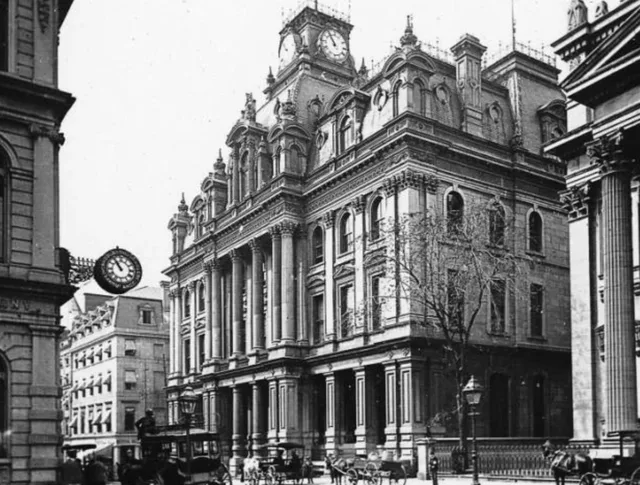
Under these conditions, the city quickly became much more than just a commercial centre. Money, logistics and a not always perfect control over the flow of goods created an environment where everyone who knew how to find their way around quickly found a place, and not only within the law.
That is why the emergence of organized crime groups in Montreal seems more like a law of nature than a coincidence. In the 1950s, this was already noticeable: as the city grew and changed, one of the most famous criminal organizations took shape in its shadow, exploiting local opportunities quite effectively to get rich illegally. To find out more about it, click here: montrealyes.com.
The Irish story of the West End Gang
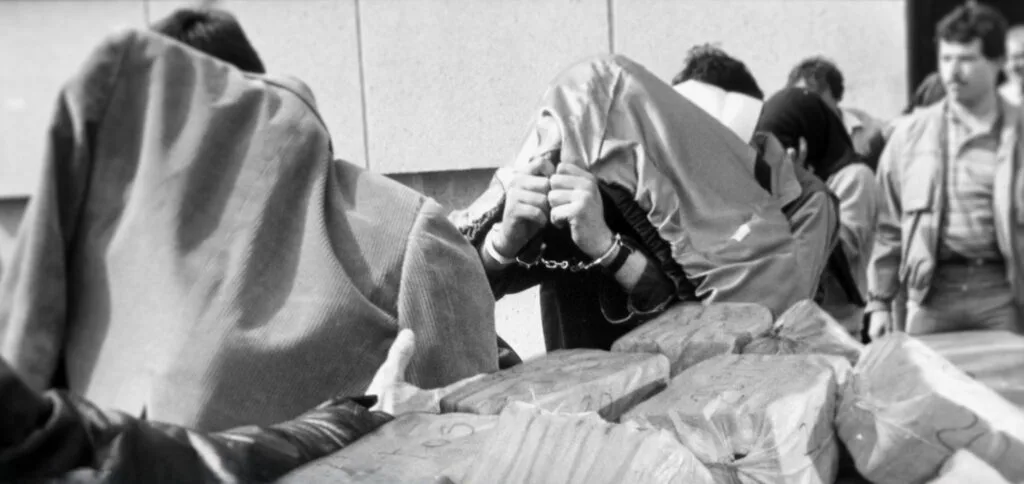
In the 1950s, southwest Montreal, in particular the streets of Pointe-Saint-Charles and Griffintown, looked like a place where the word "seaside resort" sounded like a bad joke. It was a harsh working-class setting, where a steady job at the port was considered a stroke of luck and unemployment was part of everyday life. The local English-speaking Irish community existed almost as a separate layer of the city, regarding francophone Montreal as a parallel reality with its own rules, rhythm and conflicts.
It was in this atmosphere that what would later be called the West End Gang took shape. Without idealizing it, this was not the "birth of an empire", but rather a phenomenon typical of a port district, where money flows freely among the containers and cargo. When a city has a port of this size and pockets are empty, the line between legal and illegal starts to look a lot blurrier.
At first, it was all fairly predictable: street fights, petty theft, the occasional "odd job". But very soon, the game changed. Montreal offered too many opportunities to settle for one-off offences. Transport hubs, the port and the constant flow of goods made the city an ideal infrastructure for parallel flows.
The irony is that the gang grew precisely in those same working-class neighbourhoods that were officially considered part of urban development. While city officials talked about infrastructure, another system was being built in another dimension: less visible, but far more effective. And it all came down to a single question: how much cargo could be quietly taken out of the port?
The Montreal crew and its members
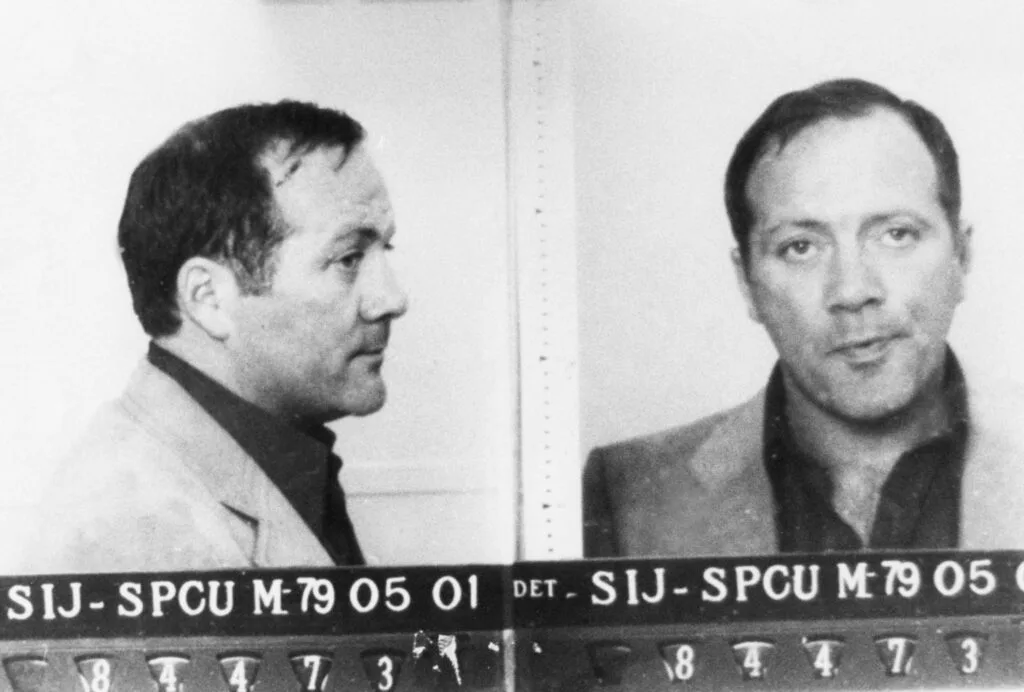
The core of the gang formed in southwest Montreal, in the Irish working-class neighbourhoods and the port's bars, where life was closely tied to precarious work at the port. Work there rarely guaranteed stability: today a shift, tomorrow waiting on the docks. In such an environment, social ties often counted for more than formal rules, and informal arrangements for more than any institution.
At the outset, it was more a circle of neighbourhood acquaintances than an organized structure. The shared background, the street and the port shaped a kind of interaction in which the idea of earning a living other than through legal work gradually took hold. Smuggling through the Port of Montreal became one of the natural paths of development: the sheer volume of goods made inspections hit-and-miss, and "losses" easy to hide.
Frank "Dune" Ryan became the figure around whom this group began to take shape. His role was not limited to that of the classic "founder" of the gang: he was rather one of the key figures of the early phase, aware that in his line of business he had to be quick, pragmatic and exploit the system's loopholes. Little by little, the group began to act in a more coordinated way, moving from an informal circle to an organized network.
Later, Alan "Thir" Ross took on a key role. His leadership is often described as stricter and more structured: control tightened and the internal organization became clearer. During this period, the group definitively took the form of a stable criminal structure, where roles were now assigned according to skills and no longer solely according to personal relationships.
Over time, the West End Gang became one of the most influential criminal groups in western Montreal, fitting into the wider organized crime network operating in the city.
All things come to an end, sooner or later
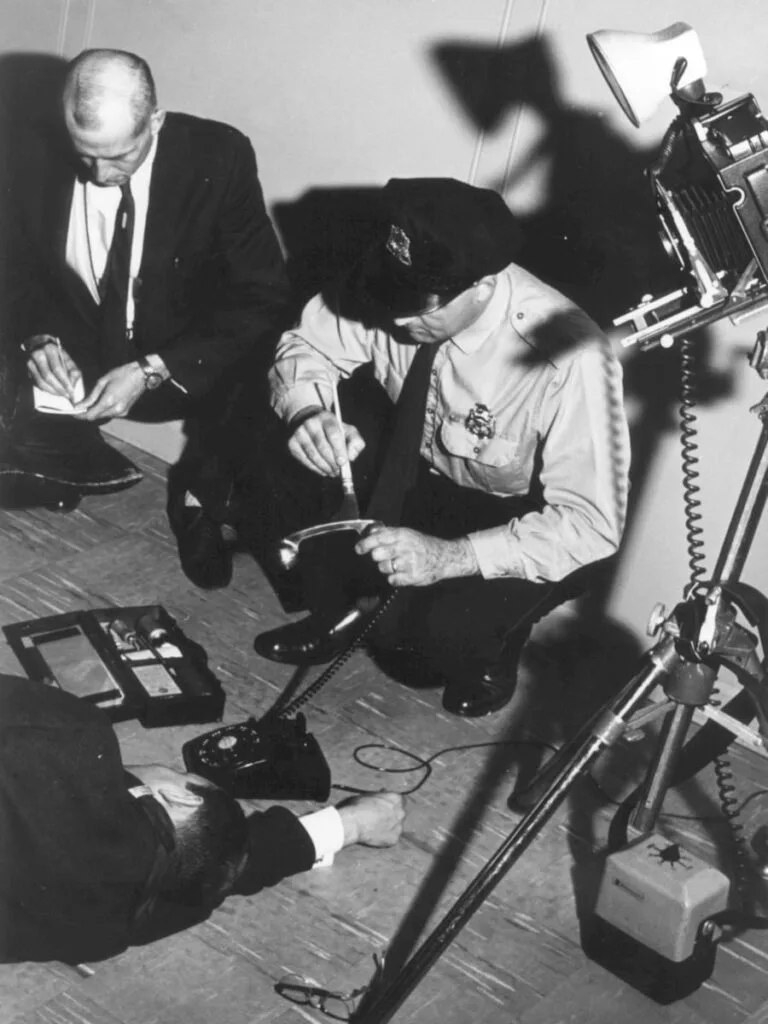
Once the West End Gang had grown so large that it could no longer be called a "local street phenomenon", it drew everyone's attention, from biker groups to the public authorities. The Montreal police gradually began putting pressure on the port and the logistics networks connected to it.
It was not a single big operation, but a long-haul process: arrests of individuals, dismantling of networks, the gradual closing of communication channels. The state acted slowly but systematically, little by little reducing the room for manoeuvre. At the same time, the structure stayed alive and adapted quickly to the new conditions.
At one point, American law enforcement regarded Frank "Dune" Ryan as one of the key figures in the North American drug trade. However, that image contrasted with the reality of his end in 1984: the man was killed at Nittolo's motel. The event highlighted the fragility of any criminal "power" more than its strength. A reputation, however big, did not guarantee control of the situation.
Over time, a genuine urban legend grew up around the gang's activities. Among these tales are stories of particularly daring operations, such as stealing cargo containers straight from the port facilities using their own equipment. Some of these stories may be exaggerated, but the mere fact that they exist shows how much influence the group had in the port at the time.
During his lifetime, Ryan kept his entourage loyal through showy gestures: gifts, luxury items, symbolic rewards. But this system only held as long as the structure itself held. Over time, under pressure from the police and internal changes, the group became less publicly active and gradually blended into Montreal's more complex criminal ecosystem, where the main rule was not to attract attention.
The West End Gang and the Peaky Blinders
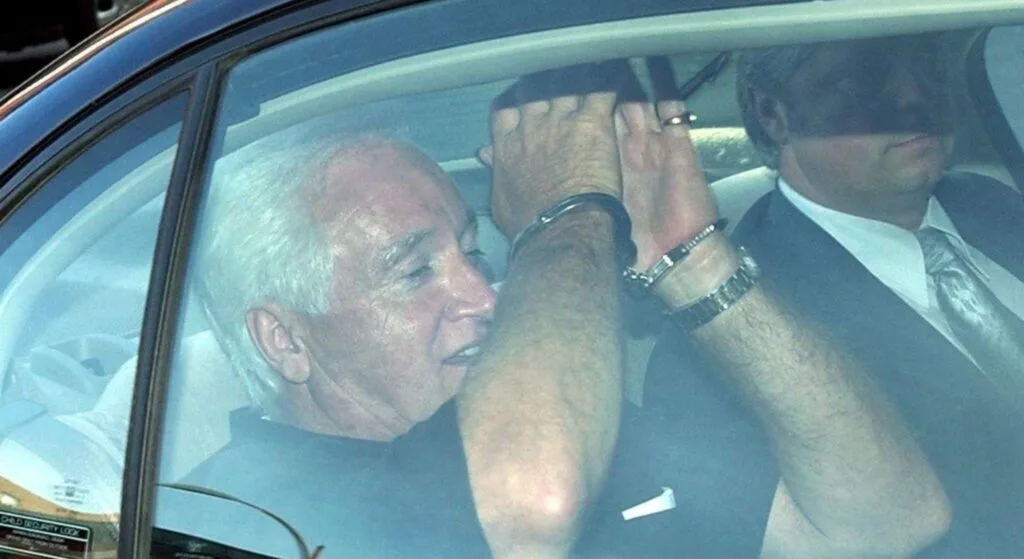
The legacy of the West End Gang does not come down only to documents kept in police archives; it has also left a noticeable mark on Montreal's urban history. Where the informal rules of the port milieu once largely held sway, a much stricter system of control took hold over time. The city was gradually forced to react, by stepping up surveillance, reforming port procedures and changing its approach to security.
Over time, this story went beyond the scope of a simple crime chronicle and became partly woven into the city's narrative. Just as in Britain, where the image of the first criminal gangs of the early 20th century was reinterpreted through cultural projects such as Peaky Blinders, Montreal has shaped its own version of this memory. The only difference is that these stories are based on real facts rather than an artistic reconstruction.
However, reducing this story to mere idealization would oversimplify it. In the end, the West End Gang has not disappeared as a historical phenomenon, but it has lost the visible presence it had in the middle of the 20th century. Rather, it has remained as a memory of a time when the Port of Montreal was a space where the line between the economy and underground practices was often drawn not by laws, but by whoever had the most influence at any given moment.
Sources:
- https://montrealgazette.com/entertainment-life/kings-of-coke-tells-the-tale-of-montreals-infamous-west-end-gang/
- https://thecanadianencyclopedia.ca/en/article/organized-crime
- https://www.cbc.ca/news/canada/montreal/montreal-port-stolen-car-export-hub-1.7173430
- https://montrealgazette.com/news/gangs-of-montreal-episode-3-the-west-end-gang-and-the-robbery-of-the-century/