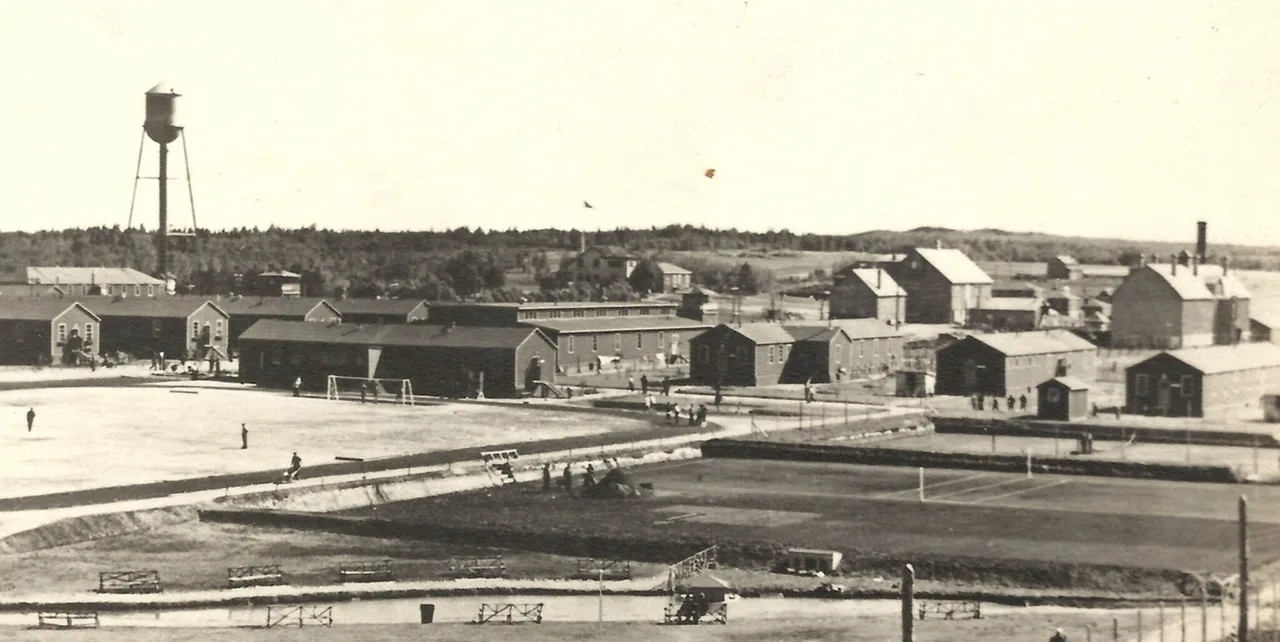
Likewise, German and Italian merchant seamen, as well as civilian internees of German, Italian or Japanese origin, were held here. Many of these facilities were converted from existing industrial and other installations. For example, a pulp mill, a sanatorium and a public forestry research station were turned into camps. But there were also facilities built specifically for this purpose. For more details on where prisoners and internees were held in Montreal and Quebec, visit montrealyes.com.
How the camps were organized in Canada
After Canada decided in mid-1940 to take in prisoners of war from the United Kingdom, the Department of National Defence began expanding its network of internment camps. These camps were initially designated by letters, matching the first letter of the nearest town or village.
For example, Camp R was the camp at Red Rock, Ontario, while Camp K was at Kananaskis, Alberta. Similarly, the camp designated by the letter S was on Île Sainte-Hélène in Montreal, Quebec.
But once the number of camps in the country began to grow, in the second half of 1941, the letters were replaced by a numbering system. A camp's number was now made up of the military district in which it was located plus an additional digit. For example, Camp I, set up on Il-o-Noir Island, became Camp No. 41.
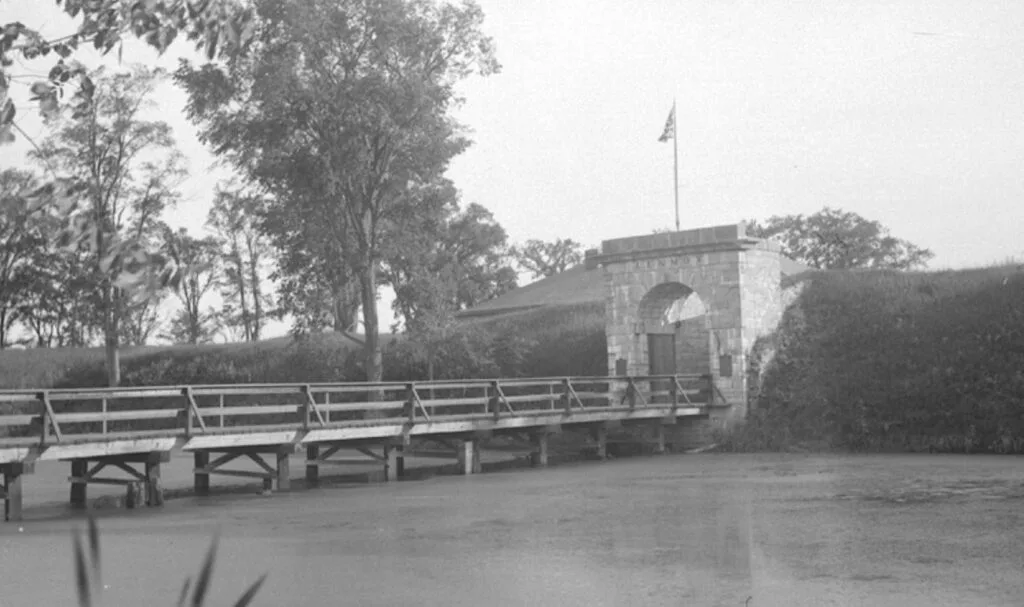
In any case, the influx of prisoners called for new camps, and among the sites chosen was Fort Lennox, on Il-o-Noir Island in the province of Quebec. The fort stands on a small island about forty-five kilometres southeast of Montreal. It had a long military history. The site was first fortified by the French in 1759, specifically to guard against invading troops coming up the Richelieu River.
Later, between 1819 and 1829, the British built Fort Lennox to deter any American invasion. That invasion never took place, but in 1920 the fort was designated a national historic site.
In the years leading up to the Second World War, some restoration work was carried out there. However, as it later turned out, it was of little use when the fort was to be converted into a camp for prisoners and internees. As a result, bringing it up to the required standards meant upgrading the site more extensively.
There was a complication, however, because the Department of National Defence was not permitted to alter the historic features of the buildings or to destroy or modify elements of historic significance. Fortunately, many of the fort's existing buildings were perfectly suited to internment.
Even so, several temporary buildings were put up inside the fort. High fences topped with barbed wire were also installed around what had originally been the barracks, which became the prisoners' quarters. In addition, guard towers and searchlights were installed at each corner.
The first refugees
The first prisoners arrived in Quebec City aboard the liner SS Sobieski on July 15, 1940. All 275 internees were Jewish refugees who had fled Germany and settled in Britain. Although they were refugees, they were nonetheless considered enemy aliens and, after the war began, were interned in British camps.
Most of them were expected to be released soon, but after that, many volunteered to join the army and fight against Germany.
In July 1941, the camp was reorganized to house the refugees, and security was reduced to twelve unarmed guards, responsible for keeping discipline and preventing civilians from reaching the island.
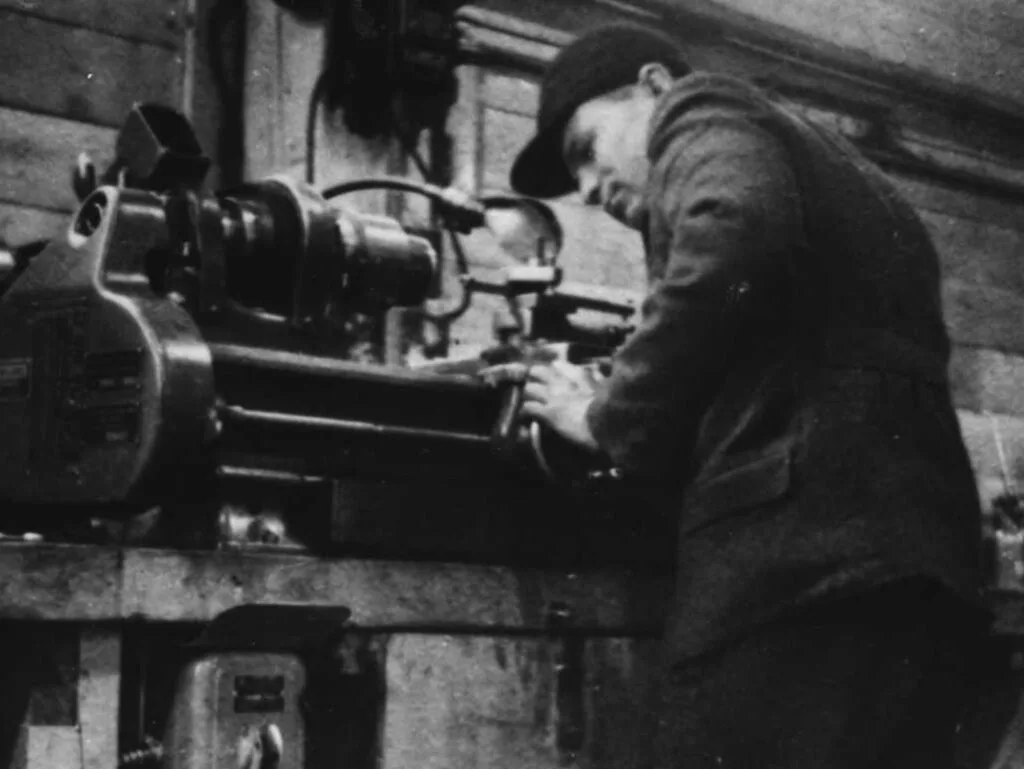
While awaiting release, many refugees found work in the camp. All of this took place under the "Internment Operations Administration Work Program". On Île-aux-Noirs, the refugees were employed in light industry, where they wove camouflage netting for the military, and they also took up farming.
Over the next two years, the refugees of Camp No. 41 were interviewed to determine whether they could be released. During these interviews, they were also asked whether they wished to stay in Canada after their release or return to the United Kingdom. Some said they wanted to go back, and they were generally transferred to the United Kingdom so that they could enlist in the British armed forces. Others decided to stay in Canada and start a new life.
Closing the camp
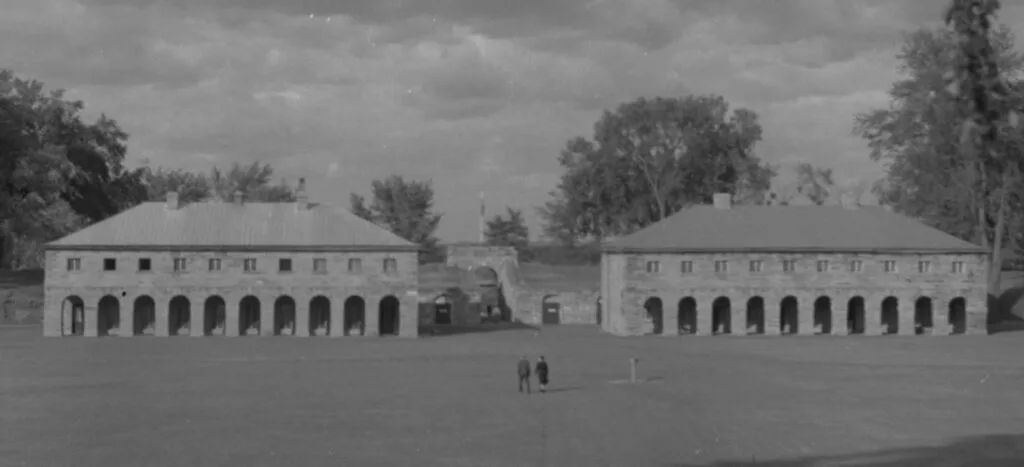
As the number of refugees gradually fell, Camp No. 41 was no longer needed by mid-1943, and the authorities prepared to close it. The remaining refugees, including Germans, Austrians, Czechs and Poles, were transferred to Camp No. 43 on Île Sainte-Hélène, or to Camp No. 32 at Galli, a former independent town that is now the oldest part of the city of Gatineau, Quebec. The last refugees finally left Fort Lennox in early November 1943.
Afterwards, in keeping with the site's status as a national historic monument, Fort Lennox was restored to its pre-war state. To that end, the barbed wire, searchlights, guard towers and other temporary buildings were dismantled.
About eight years after Camp No. 43 closed, the site was taken over by the Canadian Parks Service, which made it the Fort Lennox National Historic Site. Since then, visitors have been able to tour the fort, although the programs and exhibits focus mainly on its pre-war history.
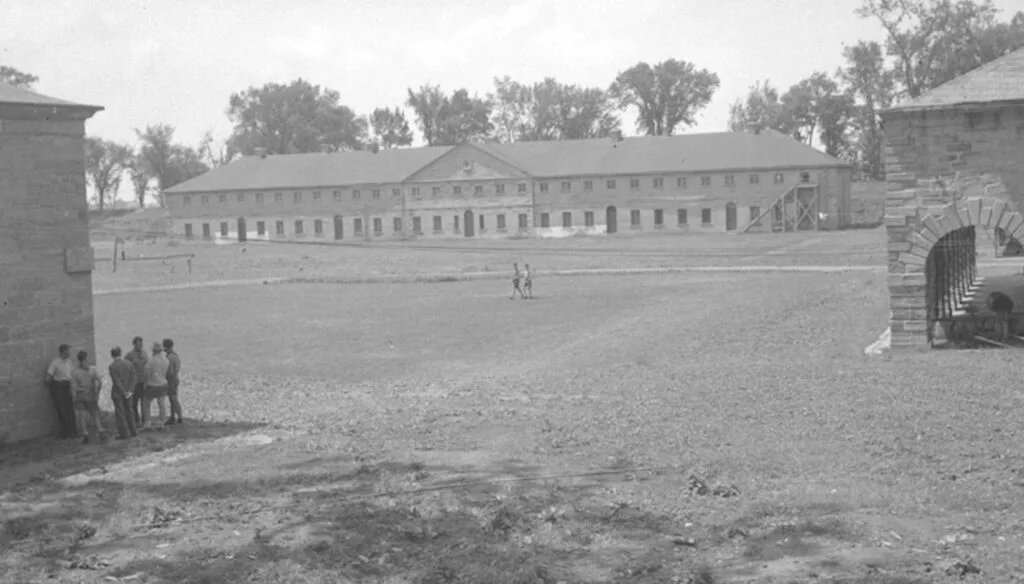
Several of the camp's buildings have survived to this day, including the fort's original barracks, which housed the refugees during the war. The same goes for the officers' mess, which was turned into the camp office. The local hospital, the guardroom, the dining hall and the guards' pantry have also been preserved. Before the war, these premises housed artillery stores, and the camp had a local shop for supplies.
A part of Montreal's history
The total number of internment camps in Canada during the Second World War has been hotly debated. Some sources claim there were as many as forty, while other, more reliable ones cite a lower figure of twenty-six. Between 1939 and 1947, the Department of National Defence set up permanent and temporary internment camps at twenty-eight locations. They held various groups, such as prisoners of war, internees and refugees.
For example, thousands of Japanese Canadians were interned in British Columbia or removed from the province under the direction of the Department of Labour, and the vast majority of these internees did not fall under the jurisdiction of the Canadian Internment Administration. However, several hundred men of Japanese origin removed from British Columbia were nonetheless transferred to internment camps, where they were placed under the authority of the Department of National Defence.
Sources:
- https://anecdoteshistoriques.net/2013/07/25/les-camps-de-concentration-du-quebec-cicatrices-de-guerre/
- https://thecanadianencyclopedia.ca/fr/article/camps-de-prisonniers-de-guerre-au-canada
- https://museeholocauste.ca/fr/categories_objects/camps-dinternement-au-canada/
- https://powsincanada.ca/pows-in-canada/internment-camps/camp-41-ile-aux-noix/