The Kanien'kehá:ka, "the people of the flint", are better known as the Mohawks. They are one of the Indigenous peoples of North America. Within the Haudenosaunee Confederacy, also known as the "Iroquois Confederacy" and the "Six Nations Confederacy", they were the easternmost nation on the continent. In the early 17th century, the Mohawks lived along the banks of the Mohawk River, in what is now upstate New York. They took an active part in the fur trade and in the colonial conflicts of the next two centuries. Many of them migrated to the St. Lawrence River valley in the 1700s. After the American Revolution, the rest moved to Canada to live on lands controlled by their ally, Great Britain. There, the Mohawks thrived and earned a reputation as activists promoting their language and culture and defending their rights. To learn more about the Iroquois Wars on the territory of present-day Montreal, visit montrealyes.com.
The Haudenosaunee Confederacy
The Haudenosaunee Confederacy, originally made up of five nations (the Onöndowàga (Senecas), the Goyogohó:no (Cayugas), the Onöñda'gega' (Onondagas) and the Onyota'a:ka (Oneidas)), was probably formed before contact with Europeans. A sixth nation, the Tuscaroras, joined later, between 1722 and 1723. Today, the Confederacy is called the Rotinonhsyón:nih Confederacy or the Six Nations Confederacy.
The story of how the Confederacy was formed gives a crucial role to the Mohawks and their chief Hiawatha in creating a political alliance among the five original Haudenosaunee nations, settled south and east of Lake Ontario. Oral tradition tells that Deganawida, the Great Peacemaker, a Huron prophet, travelled from his birthplace on the Bay of Quinte to the land of the Mohawks. There he met Hiawatha, whom he persuaded to spread his message of peace. Hiawatha thus became the Peacemaker's spokesman, and together they called a council of 50 chiefs. This is how the structure of the Confederacy was established and the Tree of Great Peace was planted. All the Haudenosaunee nations and their allies sit in the shade of this symbolic tree.
Religion and spirituality
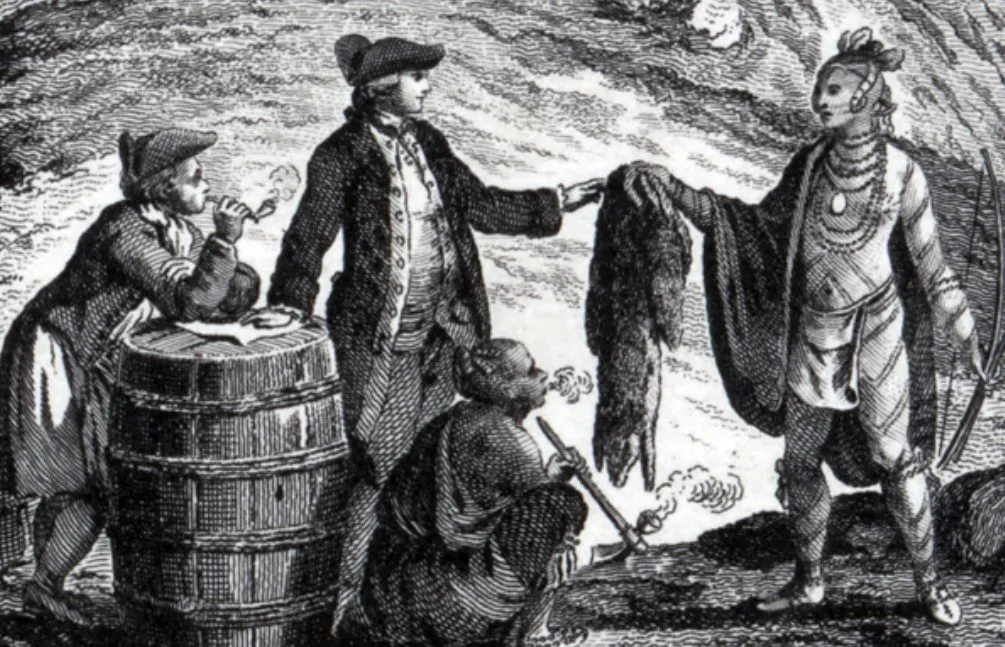
The Kanien'kehá:ka occupied the territories of what is now upstate New York, and later the St. Lawrence River region in Canada. Because these territories existed before the border between Canada and the United States was drawn, some of their communities, such as the Akwesasne reserve near Cornwall, Ontario, straddle Ontario, Quebec and New York State.
Many Kanien'kehá:ka adopted Christianity during the years of colonization. Although they had been Roman Catholics for about 250 years, some residents of Kahnawake and Akwesasne returned to their traditional belief systems in the 20th century, such as the Handsome Lake religion.
The French and Iroquois Wars
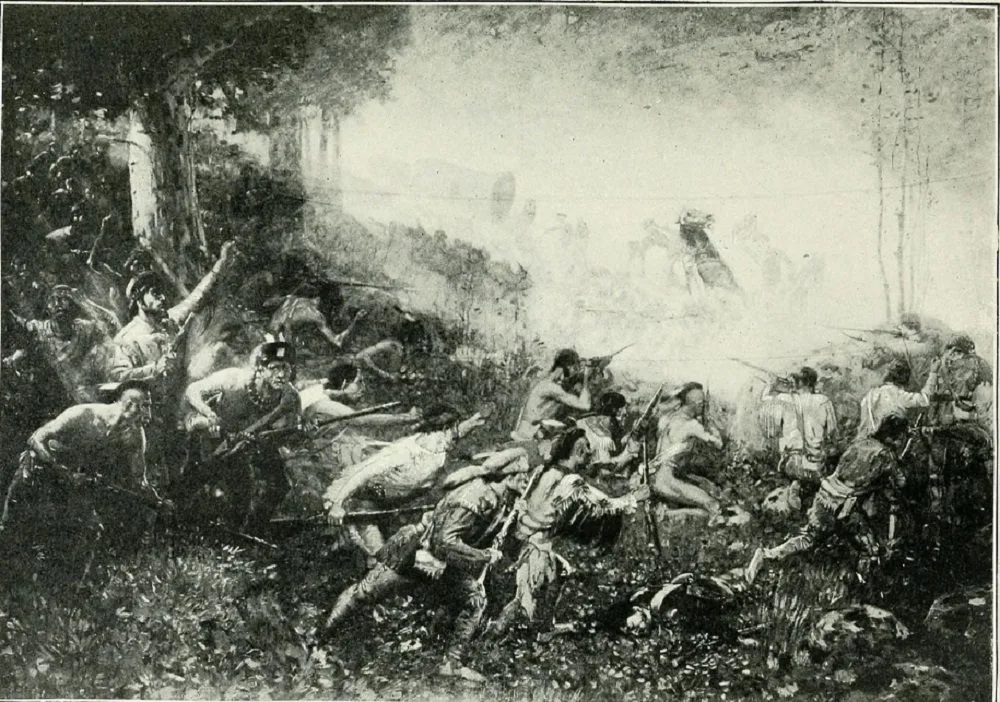
The Iroquois Wars, or French and Iroquois Wars, were a series of 17th-century conflicts that pitted the Haudenosaunee Confederacy against French colonial forces. The start of these wars is tied to competition in the fur trade. Around 1640, the Haudenosaunee launched a campaign to expand their territories in order to increase their harvest of animals such as beaver and deer.
Hostilities continued until 1701, when the Haudenosaunee concluded a peace treaty with the French. These wars reflect an intense struggle for control of resources in the early colonial era and led to the dispersal and destruction of several First Nations of the Eastern Woodlands.
In the 17th century, the Haudenosaunee economy became dependent on the European fur trade. At the turn of the century, they began trading with British and Dutch merchants, supplying animal pelts in exchange for iron tools, firearms, blankets and other goods. Their traditional enemies, notably the Huron-Wendat and the Algonquins, had established relations and trade alliances with French merchants and settlers. The highly competitive fur trade sharpened hostilities between the First Nations.
By the middle of the 17th century, the Haudenosaunee had exhausted the beaver populations in their region. They therefore launched a campaign to expand their territories and so gain access to new hunting grounds. Encouraged and armed by the Dutch settlers on the Hudson River (today New York State), the Haudenosaunee began to resort to military force. In 1628, they drove the Mohicans eastward, and in the 1630s the Mohawks attacked the Algonquins in the Ottawa Valley. From the early 1640s, the Mohawks and Oneidas attacked the settlements of New France and their Algonquin allies on both sides of the St. Lawrence valley.
From 1642, to counter these attacks, the French began building a series of fortified villages along the river as far as Montreal. They also tried to defend themselves by supplying weapons to the Hurons and Algonquins. However, the Jesuits persuaded the authorities to limit the sale of weapons to new converts, whom they did not consider reliable.
One famous Iroquois attack targeted the French settlement of Lachine, west of Montreal. French expansion westward in the 1670s and 1680s kept the Haudenosaunee from reaching new territories rich in beaver and put New York's fur trade at risk.
The Iroquois attack on Lachine
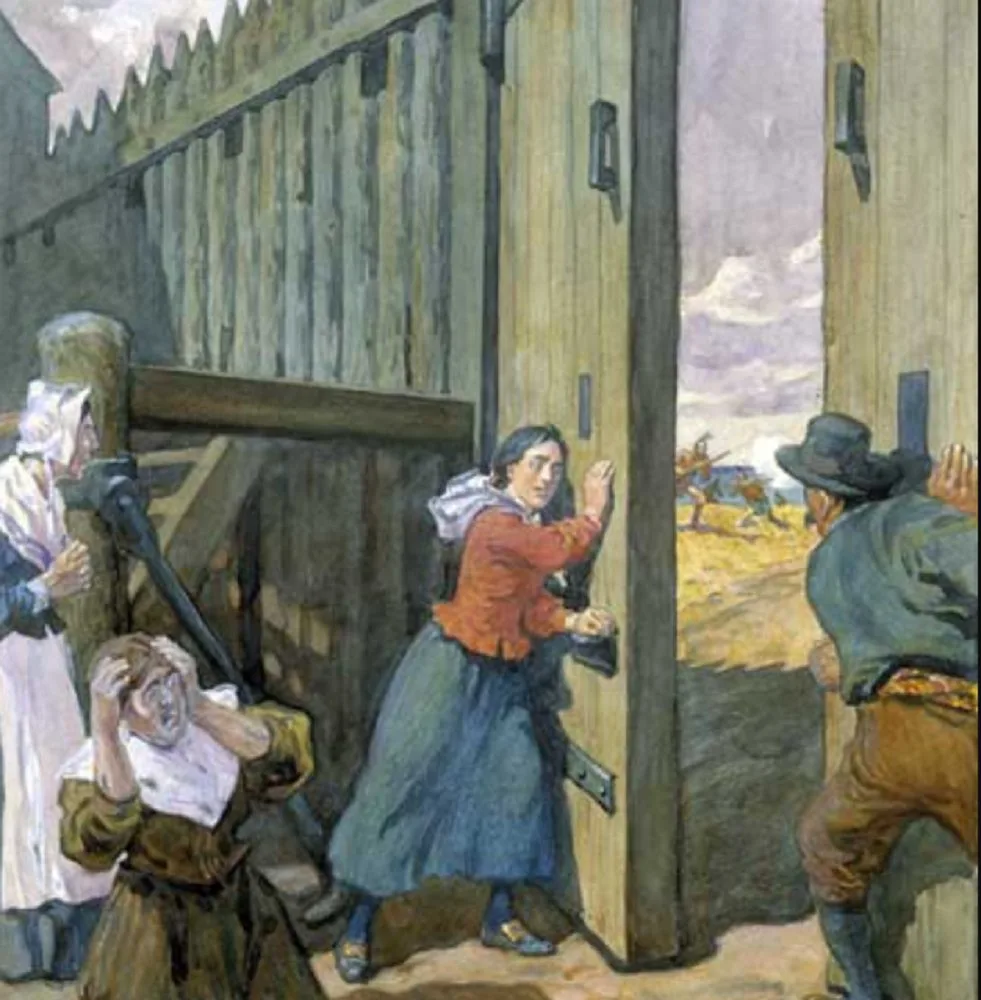
Unable to confront the French merchants directly while France and England were at peace, the New York authorities decided to push the Iroquois onto the warpath. On the morning of August 5, 1689, some 1,500 warriors attacked the small settlement of Lachine, west of Montreal, killing 24 settlers and taking more than 60 prisoners. The attack was so brutal that it spread terror among the inhabitants of the Montreal region, who suffered several other similar raids and massacres over the following decade.
One of the consequences of the Iroquois Wars was the dispersal of several First Nations. The Senecas' policy was to drive out the Hurons. Their raids on Huron villages began in 1642 and peaked in 1649, when more than 1,000 Iroquois and Seneca warriors attacked two major villages. Groups of Hurons held out by taking refuge on a nearby island, but were eventually forced to disperse.
After the destruction of the Hurons and the defeat of the Neutrals, the Haudenosaunee attacked the Mohicans, the Sokokis and the Abenakis. In Quebec, they occupied territories stretching from Tadoussac in the east to Lake Mistassini in the north.
In 1653, the Haudenosaunee decided to make peace with the French, as the Confederacy longed for this truce. However, an agreement involving all the nations was not signed until 1667, after the Carignan-Salières Regiment had burned several Mohawk villages and their food stores.
Over the course of these conflicts, the Haudenosaunee managed to defeat five nations surrounding their territory. However, these victories did not bring the hoped-for prosperity. The 1667 treaty allowed the French to extend their trade northward and, thanks to the explorer Louis Jolliet, to cross the Great Lakes and reach the Mississippi River.
And although the Haudenosaunee helped rekindle a wider conflict between the French and the British by attacking Lachine in 1689, it did not work out in their favour. With the help of the Troupes de la Marine, the defenders of New France eventually forced the Haudenosaunee to negotiate a new peace.
In the treaty ratified in July 1701 in Montreal, known as the Great Peace of Montreal, they agreed to remain neutral in the wars between the English and the French.
Next articleA Great Military Story: How the Crimean Cannons Came to Montreal