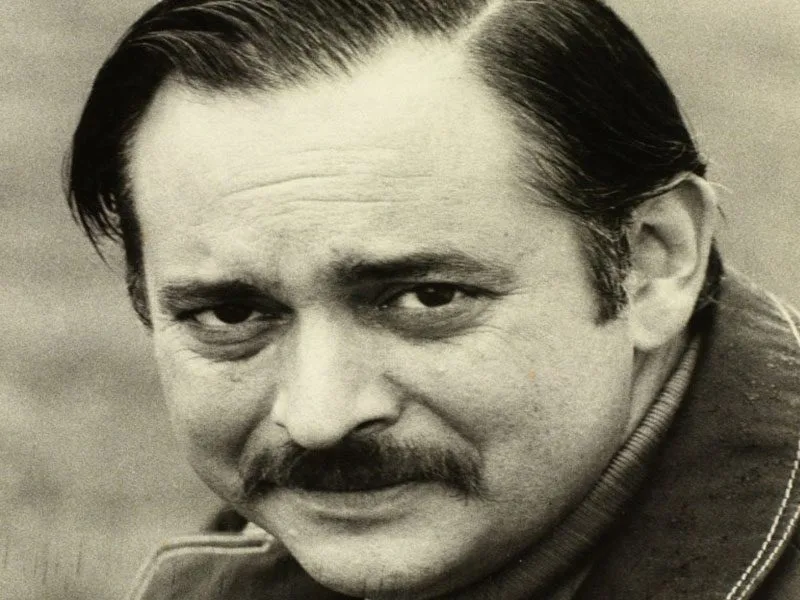
Jacques Parizeau was the 26th premier of Quebec and devoted great effort to the cause of the province's independence, a project that, in his view, was meant to foster economic, social, environmental and cultural development. To learn more about this politician's life, visit montrealyes.
Youth
Jacques Parizeau was born in Montreal on August 9, 1930. He grew up in a well-off family; his father was an insurer and businessman. His parents supported bilingualism in Quebec, which is why, from childhood, Jacques Parizeau learned English just as he learned French.
He went to secondary school at Collège Stanislas in Montreal. He then studied at HEC Montréal (the École des hautes études commerciales), which at the time was part of McGill University. Thanks to his excellent grades, his professor and mentor, François-Albert Angers, got the university to fund his studies in Europe. In return, after earning his doctorate, Jacques Parizeau was to come back to Montreal to teach at HEC. Indeed, in the 1950s, discrimination against the French-speaking population was blatant, even though it made up the majority of Quebec's residents. English-speaking Canadians enjoyed better salaries and held most management positions. That is why Professor Angers sought to train a French-speaking elite capable of overcoming this segregation.
At 21, Jacques Parizeau entered the Institut d'études politiques de Paris, and then the Faculté de droit de Paris. Once he had graduated, Professor Angers insisted that he continue his studies in Paris. However, Parizeau, convinced that French degrees carried little weight, decided to move to London, where he enrolled at the London School of Economics (LSE). After earning his doctorate in economics, Jacques Parizeau finally returned to Canada to teach at HEC Montréal, as agreed.
The start of his political career
On June 22, 1960, Jean Lesage's Liberal Party came to power, setting off a series of reforms known as the "Quiet Revolution." This period gave momentum to the struggle for the national and language rights of Quebecers. New movements calling for broad autonomy, and sometimes even full independence for Quebec, came into being, including the Parti Québécois, founded in 1968.
It was at this time that his HEC colleague, Roland Parenteau, invited Jacques Parizeau to join the Conseil d'orientation économique du Québec. Among Parizeau's main achievements in this role were the nationalization of hydroelectric power (Hydro-Québec), the nationalization of the mines of the Asbestos Corporation Limited and the development of the Quebec Pension Plan.
In 1976, Jacques Parizeau became Quebec's Minister of Finance in the government of Premier René Lévesque. One of his major reforms was the Quebec Stock Savings Plan (RÉA), designed to lower taxes for the poor and middle classes and raise them for the wealthiest.
Jacques Parizeau, premier
In 1984, because of differences of opinion with the premier, Jacques Parizeau resigned as Minister of Finance. He nevertheless returned to the party three years later, after the electoral defeat of Parti Québécois leader Pierre-Marc Johnson. In 1988, Jacques Parizeau himself took over as party leader. Five years later, the Parti Québécois won a majority of seats, and Parizeau became premier, promising to hold a referendum on Quebec sovereignty.
The promise was kept, and on October 30, 1995, Quebecers had the chance to choose the future of their province. For Jacques Parizeau, this referendum was the culmination of a 35-year political career. He had promised to step down as premier if the referendum failed. When the votes were counted, Quebec had not won its independence: the "No" side won with 50.6% of the vote. The next day, as he had pledged, Jacques Parizeau ended his political career.