Canada is a country where political disputes are usually settled not with weapons, but through committees, debates and endless consultations. Montreal is no exception to the rule: here, people would sooner argue about the language of shop signs or the municipal budget than resort to radical measures. And on the whole, it works: political violence is so rare in Canada that every such case causes a shock and stays etched in memory for a long time.
But dig a little deeper and you find that these more than 300 years of history have not been free of dark spots. It turns out there have been gunshots, explosions, kidnappings and even politically motivated murders here, even if not on the scale the world is used to in Latin America or the Middle East.
So who killed whom in Montreal for political motives, why and when? The story is not as dull as one might think. And to learn more about the dramatic details, visit montrealyes.com.
The political situation in Montreal
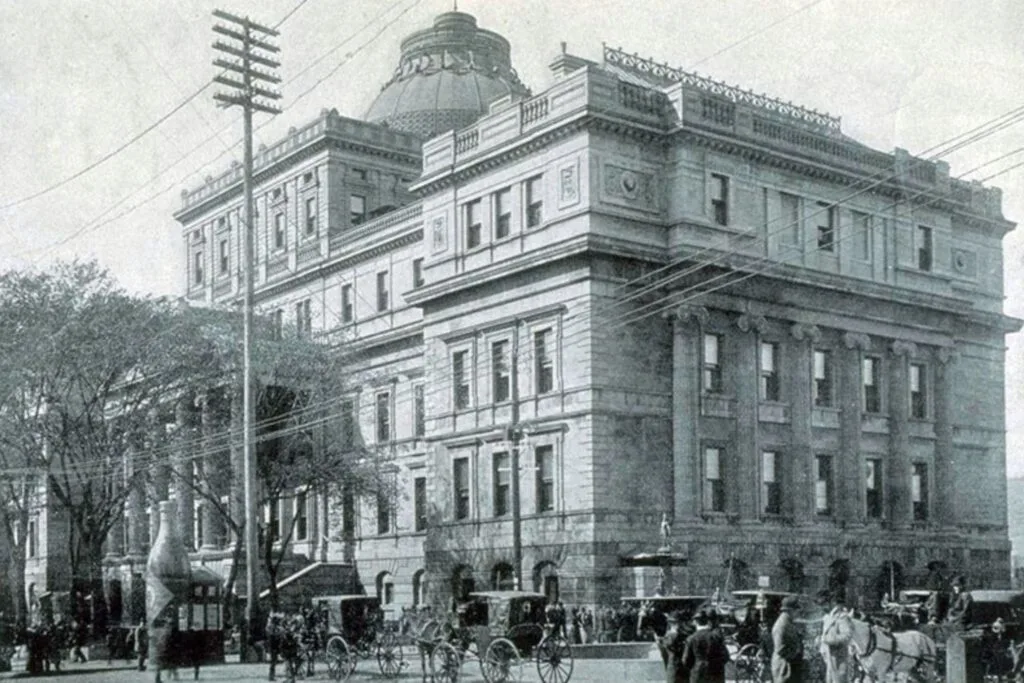
By the middle of the 19th century, Canada already had solid experience of "adult life", even if at the time it was still not quite sure what it wanted to be: a country in its own right, an ambitious colony or simply a place where British customs were upheld with Canadian stubbornness.
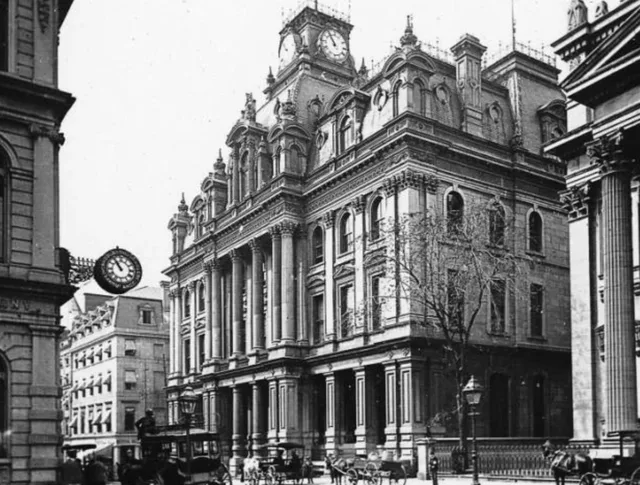
At that time, Montreal looked like a booming city. The port was running at full capacity, trade was growing, and immigrants arrived in waves, mainly from the British Isles and Ireland, bringing with them both labour and old grudges. The French-speaking population, which had formed the foundation of the city since the days of New France, gradually found itself in a situation where its "historical advantage" no longer guaranteed its economic advantage.
Economically, Montreal became the nerve centre of the colony: here, money moved faster than political slogans changed. But development came with inequality, typical of the industrial age. Some built banks and trading houses, while others scraped by in the overcrowded neighbourhoods near the port.
Politically, everything looked like a permanent quarrel between those who believed it was better to do things "as in London" and those who thought "we would manage just fine on our own here". Power was still far away, in Great Britain, but its decisions were felt. And it was precisely in this period that what would later be called national movements, reforms and, at times, very loud protests began to build up in the air.
Socially, Montreal was not a peaceful city either: linguistic divides, religious differences, economic disparities; none of this existed in parallel, but literally on the same streets. At times it felt as if the city was inhabited not by a single society, but by several, which were simply forced to share the same geographical space.
In this context, politics stopped being an office affair. It gradually spilled out into the street: without radical gestures for the time being, but in a climate of palpable tension.
Who was Thomas D'Arcy McGee?
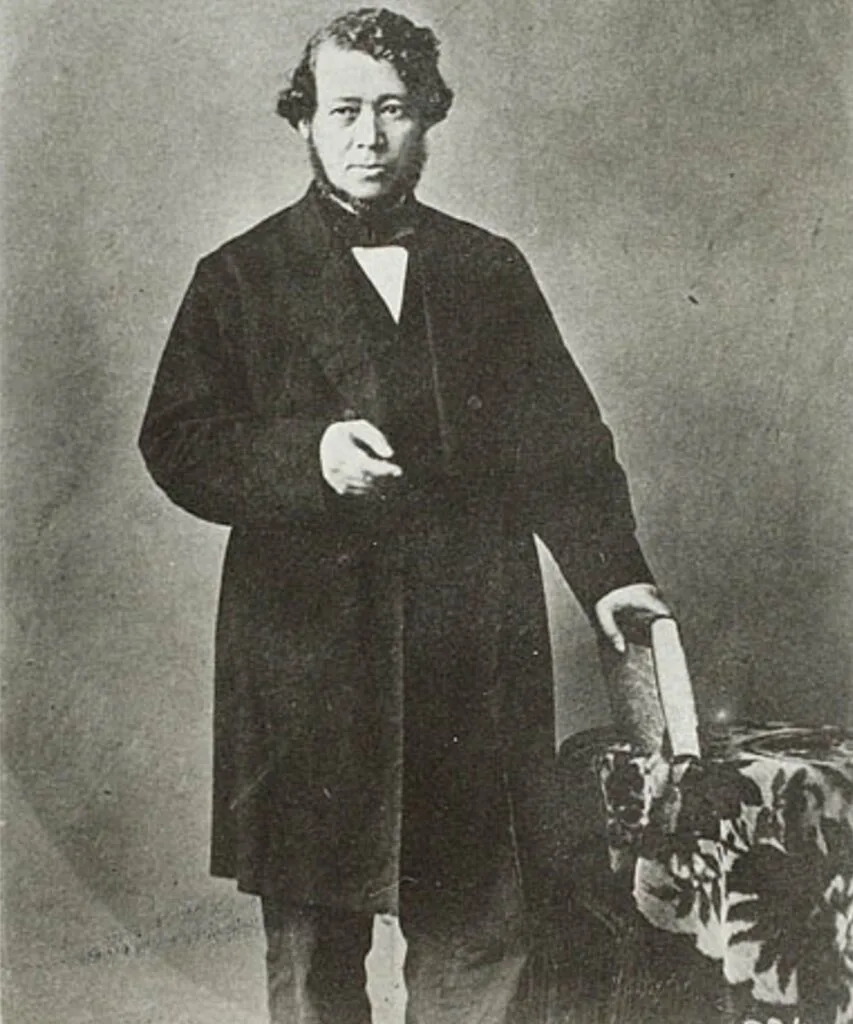
It is precisely in this rather turbulent Canadian picture that the figure of Thomas D'Arcy McGee appears, a man who seems to have been made specially to provoke, in any company, either admiration or genuine irritation.
McGee was born on April 13, 1825, in Ireland, in the town of Carlow. He grew up at a time when Ireland lived in a climate of constant social tension. He received a fairly good education for the time, went into journalism very early and quickly understood that a well-chosen word could sometimes have as much impact as any political manifesto.
In his youth, he was more of a revolutionary pamphleteer than a conventional politician: he wrote with vehemence and emotion, openly showing his sympathy for the Irish national movement. After playing an active role in Irish political circles, he emigrated to North America and, in the 1850s, ended up in Canada, where he settled in Montreal.
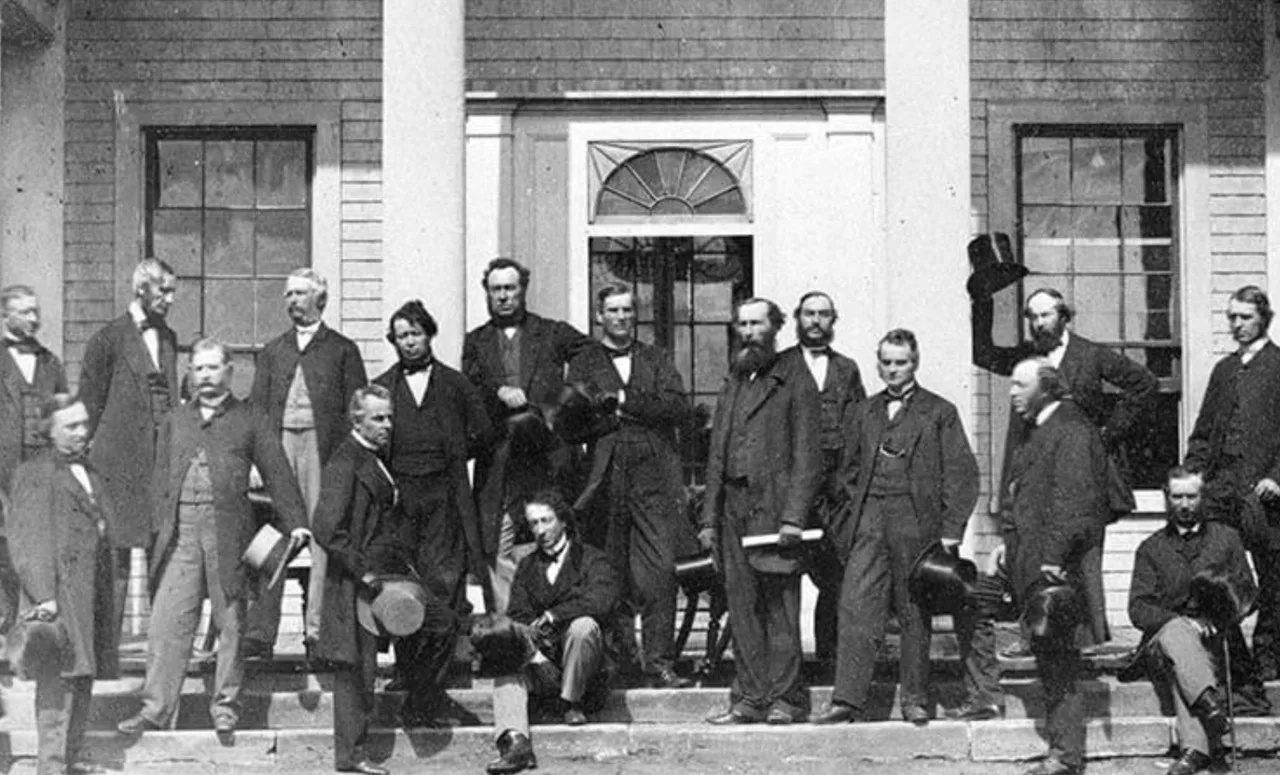
It was there that his career took a completely different direction. McGee quickly became involved in the political life of the colony, was elected member for the riding of Montréal-Ouest and began working in the legislative bodies, which at the time were still only at the very beginning of forming the future nation. He was one of those who promoted the idea of uniting the British colonies into a single Canadian confederation, that is, in fact, the project of the future Canada as a state.
His position seemed fairly pragmatic: rather than remaining dependent on London and suffering internal conflicts, a stable political system with its own institutions had to be put in place.
In Montreal, McGee had considerable influence. He was not only a politician, but also a public intellectual: he spoke, wrote, shaped opinion and knew how to do it in a way that was hard to ignore. In the political world of the time, that meant only one thing: either you entered the big game, or sooner or later you ended up in its darkest pages.
The story of the conflict and the murder
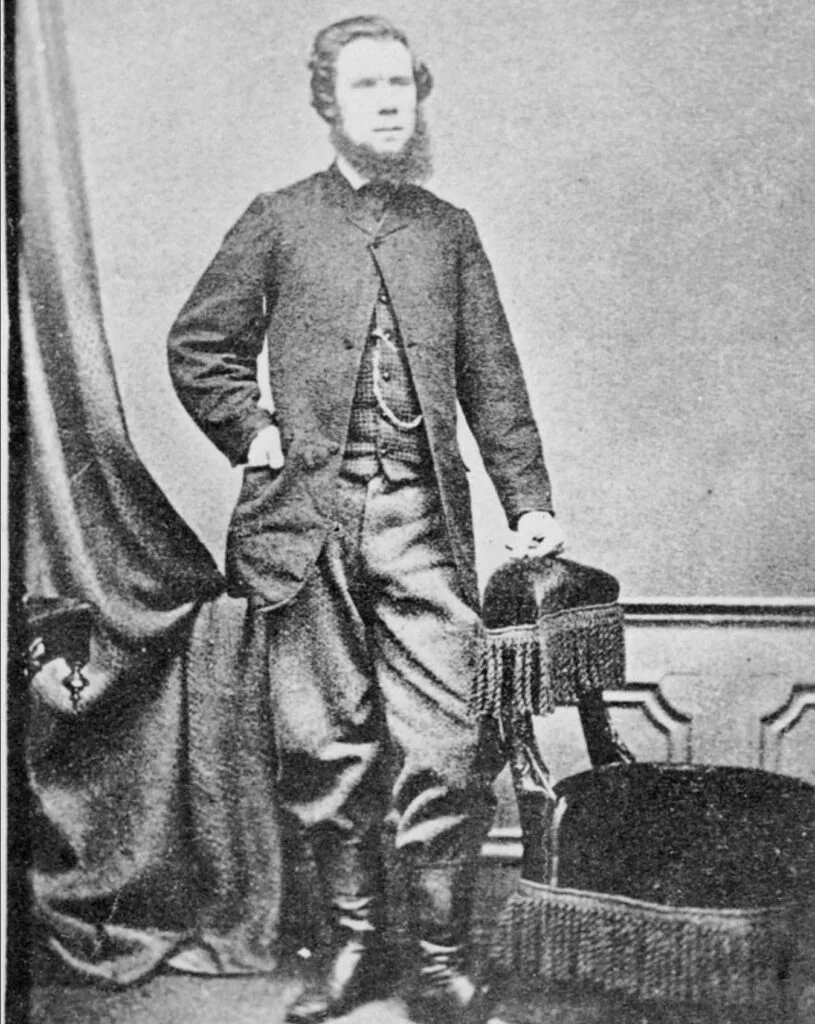
The conflict itself, which ultimately cost McGee his life, was neither a spontaneous quarrel nor a chance political flare-up. It was the story of ideas he had once defended, but had later come to see as dangerous.
It concerns the tensions around radical Irish movements in North America: the "Fenians", who campaigned for Ireland's independence from Great Britain. In his youth, McGee had some sympathy for these ideas, but over time he became their fierce critic. And it was precisely this that turned him, in the eyes of part of the radical milieu, from "one of us" into a "traitor".
By the 1860s, he was already an influential Canadian politician and openly opposed any attempt to import revolutionary methods from Europe into Canadian politics. Put simply, he believed that the new state should be built through institutions, not through violence and political romanticism. This was the backdrop to the tragedy.
On the night of April 6 to 7, 1868, as McGee was returning home after a sitting of Parliament in Ottawa, he was shot right at the entrance to his house on Sparks Street. The shot was fired at point-blank range with a revolver. He died almost instantly.
The killer turned out to be Patrick J. Whelan, a man linked to radical circles, who was later arrested. The police quickly picked up his trail: he was arrested the very next day, and the case became one of the most notorious in Canada at the time. The court found him guilty, and he was executed by hanging on February 11, 1869.
Burial in Montreal
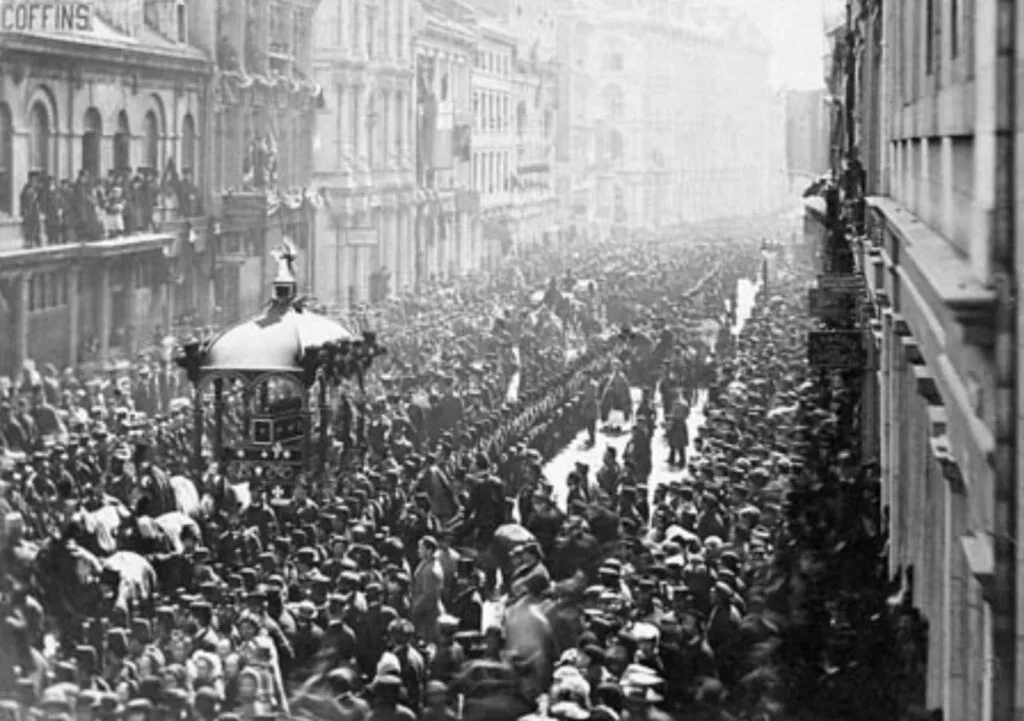
In Montreal, and in the colony more generally, McGee's death was not seen as "just another piece of political news", but as an event that fell outside the usual order of things. For a society already used to parliamentary quarrels and newspaper battles, the mere fact of a political assassination seemed almost unnatural, as if someone had suddenly broken an important unwritten rule.
The reactions were mixed, but loud. On the one hand, there was shock and genuine sympathy, especially among supporters of Confederation, for whom McGee was one of the symbols of a new political project. On the other, there was a guarded tension and even a hidden justification from the more radical circles, who saw him as a man who had "switched sides".
The funeral in Montreal turned into a large-scale event. The procession drew an immense crowd: contemporaries spoke of tens of thousands of participants, with estimates ranging from 60,000 to 80,000 people. The city literally came to a standstill for a while: shops closed, and the streets were filled with people who had come to say goodbye or simply to see what the death of a politician of such stature looked like.
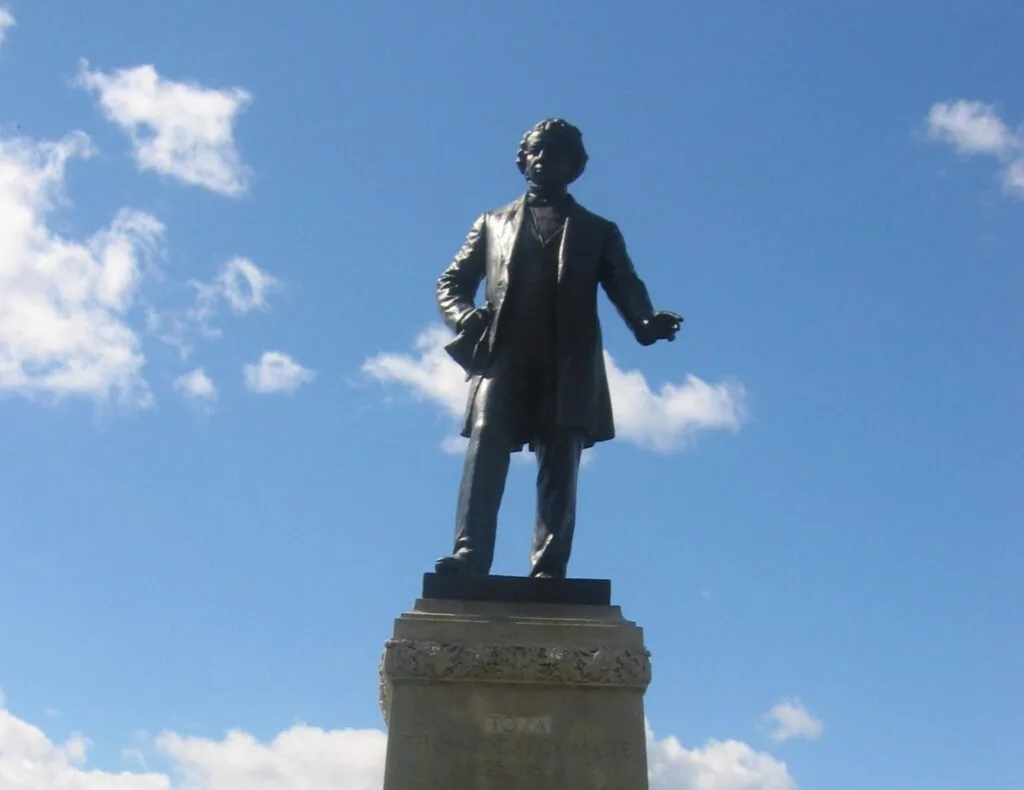
All in all, for Montreal this was one more episode in the city's long history, where big ideas sometimes have very down-to-earth and brutal consequences. And although, with time, this event passed into the annals of history, it left behind a simple realization: even in a politics of "peaceful debate", there are moments when the silence that follows a gunshot says more than any speech.
Sources:
- https://www.biographi.ca/en/bio/whelan_patrick_james_9E.html
- https://www.biographi.ca/en/bio/mcgee_thomas_d_arcy_9E.html
- https://celticlifeintl.com/thomas-darcy-mcgee/
- https://macdonaldlaurier.ca/category/projects/past-projects/fathers-confederation/thomas-darcy-mcgee/