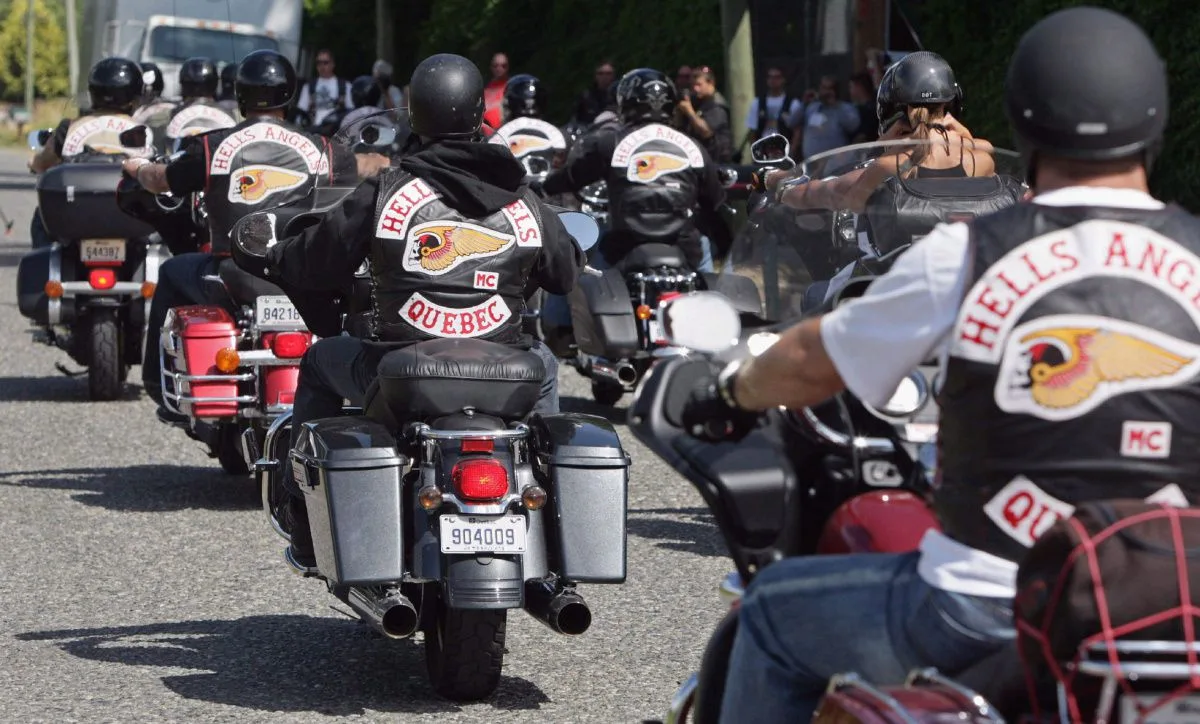
The Quebec biker war lasted from 1994 to 2002 and pitted two rival gangs against each other: the Hells Angels and the Rock Machine. What was at stake was control of the street drug trade. Sadly, this confrontation led to the deaths of 162 people and left dozens injured, including among the civilian population. To learn more, visit montrealyes.
Who are the Hells Angels
The Hells Angels motorcycle gang was founded in California sometime between the 1940s and the 1950s. In the 1970s, they arrived in Quebec, where they quickly pushed out the local biker group, the Popeyes, and established a monopoly on the drug trade. In 1977, they took part in what became known as the first biker war, against the Outlaws gang, a conflict from which they emerged victorious.
From friends to enemies
Interestingly, one of the leaders of the Hells Angels, Maurice "Mom" Boucher, and the head of the Rock Machine, Salvatore Cazzetta, were once good friends. They belonged to the same biker gang, the SS, based in Pointe-aux-Trembles, at the eastern tip of the island of Montreal. Their main activity was "cleansing" the city of non-white immigrants, mostly by beating them up to force them to go back to their countries of origin.
Later, Maurice Boucher decided to join the Hells Angels, a gang involved in drug trafficking, which allowed them to make a lot of money, unlike the unpaid beatings of immigrants "of colour."
The Hells Angels earned a grim reputation in March 1985, during what is known as the Lennoxville massacre. On that occasion, the "Angels" shot dead several of their own members after failing to reach a compromise over how to run their criminal affairs.
These events clearly appealed to Maurice Boucher, who readily backed the Hells Angels. For Salvatore Cazzetta, on the other hand, such a turn of events was unacceptable. So he left the Hells Angels and, together with his brother Giovanni, founded his own biker gang, the Rock Machine, in 1986.
The start of the war
Over the following years, weakened by the Lennoxville massacre, several other shootings and a series of arrests, the Hells Angels saw their influence in the city decline, which allowed the Rock Machine to gain a foothold in the market. However, in the early 1990s, the "Angels" decided to win back their former glory. The arrest of Salvatore Cazzetta in Florida, who was sentenced to 10 years in prison for cocaine trafficking, worked particularly in favour of their plans. From then on, the Hells Angels decreed that anyone involved in the drug trade in Montreal had to buy their supply exclusively from them.
These terms did not suit Giovanni Cazzetta. So he used his connections to build an alliance, the "Dark Circle," to counter the Hells Angels' attempts to impose their monopoly on the drug trade in Quebec.
The first shots came from the Rock Machine. On July 13, 1994, masked men murdered Pierre Daoust, a member of the Death Riders, a club affiliated with the Hells Angels. The next day, another murder attempt targeted a member of the "Angels" gang. The Sûreté du Québec also arrested several members of the Rock Machine over an attempted bombing of a building on Montreal's South Shore.
In response, the Hells Angels, led by Maurice Boucher, decided to go to war in turn.
Civilian deaths
Between 1994 and 1995, the conflict led to many shootings, killing members of both sides. However, on August 9, 1995, the biker war struck the civilian population head-on with the death of Daniel Desrochers, an 11-year-old boy killed by a car bomb explosion in the Hochelaga-Maisonneuve neighbourhood of Montreal. The child became the first innocent victim of the conflict. From then on, the public began to openly voice its anger at the passivity of the Montreal police, who did not seem to take the situation seriously or try to stop the bloodshed. By early 1996, the death toll of the biker war had reached 28. In 1997 and 2001, laws were passed to toughen penalties for members of organized crime groups.
Another event that shook public opinion was the attempted murder of journalist Michel Auger in September 2000. He was shot six times in the back, but found the strength to call for help on his cellphone. The investigation later revealed that the Hells Angels had ordered the attack. Public outrage eventually led to a temporary truce between the gangs. Calm returned to Montreal for a few weeks before the violence resumed.
The end of the war
In 1999, the Hells Angels seemed on the verge of winning the conflict and establishing their monopoly on the Montreal drug market. That year, however, the Rock Machine won the support of the international outlaw motorcycle club, the Bandidos. The Hells Angels then began to fear that the Bandidos would take over the Canadian drug market, especially the lucrative province of Ontario. That is why, in December 2000, about 200 Hells Angels members left Montreal to settle in Ontario.
In March of the following year, as part of the police operation "Printemps 2001," hundreds of bikers were arrested across Canada, including Maurice Boucher. This dealt a heavy blow to the Hells Angels in Montreal, allowing the Bandidos bikers to take over the drug market. But their success was short-lived. In June 2002, the Canadian leaders of the Bandidos were arrested in turn. The organization was practically wiped out in one stroke, and peace finally returned to Montreal.