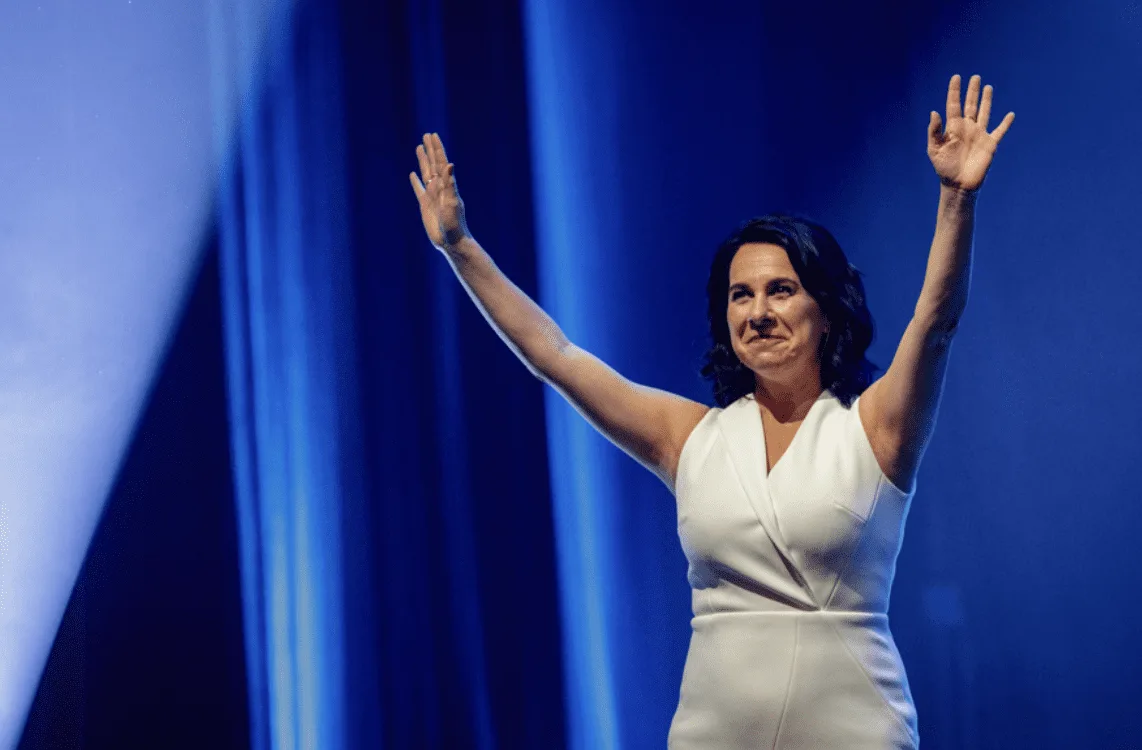
In the 21st century, Valérie Plante became a political figure who dared to transform Montreal's urban landscape for good. By becoming mayor of Montreal, she established herself as a major force in Canadian politics. Her rise to the post not only marked a historic moment for the city but also showed the growing influence of women in leadership roles. To learn more, visit montrealyes.
Her life story

Montreal's future 45th mayor, Valérie Plante, was born in 1974 in the small town of Rouyn-Noranda, Quebec. An interesting fact about her is that her youth and education were not geared toward politics at all, but rather toward anthropology and museology.
Curious and energetic as a young woman, she first studied English in North Bay before moving to the big city of Montreal at the age of 20. There she began university studies in anthropology and museology. Once she graduated, Valérie Plante went straight into the workforce. She held various positions, gaining experience in several non-profit organizations. Among other roles, she was director of communications for the Filles d'action Foundation.
In the 1990s, Valérie Plante moved to France, where she worked as a tour guide for a while.
How did Valérie Plante get into politics?

Although her background may seem far removed from politics, that is not the case. From a very young age, Valérie Plante developed a deep love for her community and a keen sense of social justice. Despite her degree in anthropology, she had a sharp understanding of urban problems. What's more, she had solutions to offer for the challenges Montreal was facing. That is what led her to run in the 2017 municipal election. Her ideas and her vision for Montreal's future made her a voice for change and innovation.
Valérie Plante was also leader of the progressive and environmentalist municipal party Projet Montréal. She also sat as a city councillor for the Sainte-Marie district.
Valérie Plante was elected mayor of Montreal twice, in 2017 and in 2021.
Achievements as mayor of Montreal

One of Valérie Plante's main goals as mayor was to make Montreal a more inclusive, accessible and fair city for all its residents. She gave priority to social issues such as affordable housing, access to quality education and the modernization of public transit. Notably, during her 2021 campaign, she pledged to add 60,000 social and affordable housing units. Valérie Plante has consistently worked to improve urban life. Understanding that a prosperous city is built on a strong, united community, she championed policies aimed at narrowing the gaps between different socio-economic groups.
Under Valérie Plante's leadership, Montreal made significant progress on its environmental initiatives. Recognizing the urgency of fighting climate change, she put in place policies to reduce greenhouse gas emissions, promote renewable energy and green the city. The mayor's commitment to sustainable development earned Montreal international recognition, positioning it in the 2020s as a leader in the global fight against climate change.
In addition, Valérie Plante made supporting local businesses and promoting economic growth a priority. She understood that a strong economy is crucial to the well-being of Montrealers and worked to create an environment that encourages entrepreneurship and innovation. Through various initiatives and partnerships, she succeeded in revitalizing neighbourhoods, attracting investment and creating new jobs.
Valérie Plante's leadership style is defined by transparency, closeness to people and constant dialogue. She actively engaged with Montrealers, listening to their concerns and involving them in decision-making. This accessible and open approach fostered a sense of belonging and empowerment among residents, strengthening the bond between citizens and their administration.
As a modern woman in politics, Valérie Plante has faced her share of challenges and hardships. Yet she managed to overcome them. Her success shows the immense potential and skills of women who hold leadership positions in politics.
Valérie Plante's term as mayor of Montreal shows the transformative power of inclusive governance and progressive policies. Through her dedication to the well-being of the city and its residents, she redefined the role of the modern elected official, breaking down barriers and paving the way for a more inclusive and sustainable future. She also proved that women play an essential role in shaping the urban political landscape in the 21st century.
Next articleThe Story of Montreal's 44th Mayor, Denis Coderre