Children learned not only to read and write, but also to live in a climate of uncertainty, austerity and constant waiting for news from overseas. And even though they never saw the fighting, the war still shaped the way they saw the world. To learn more about this, visit montrealyes.com.
A school that did not close
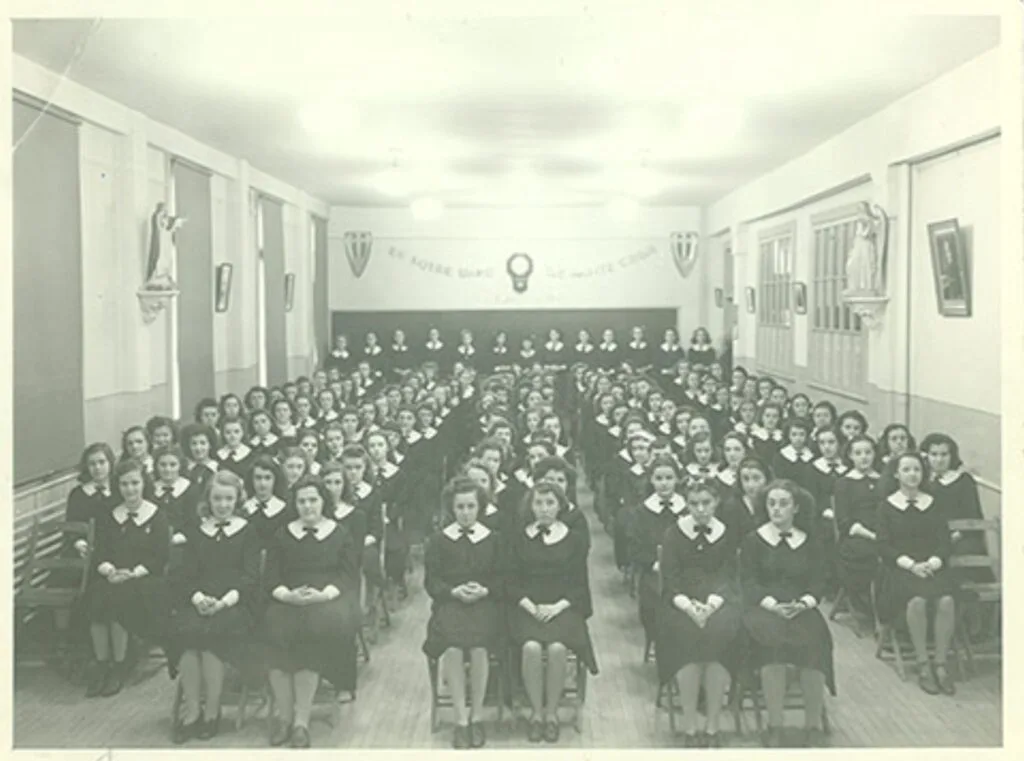
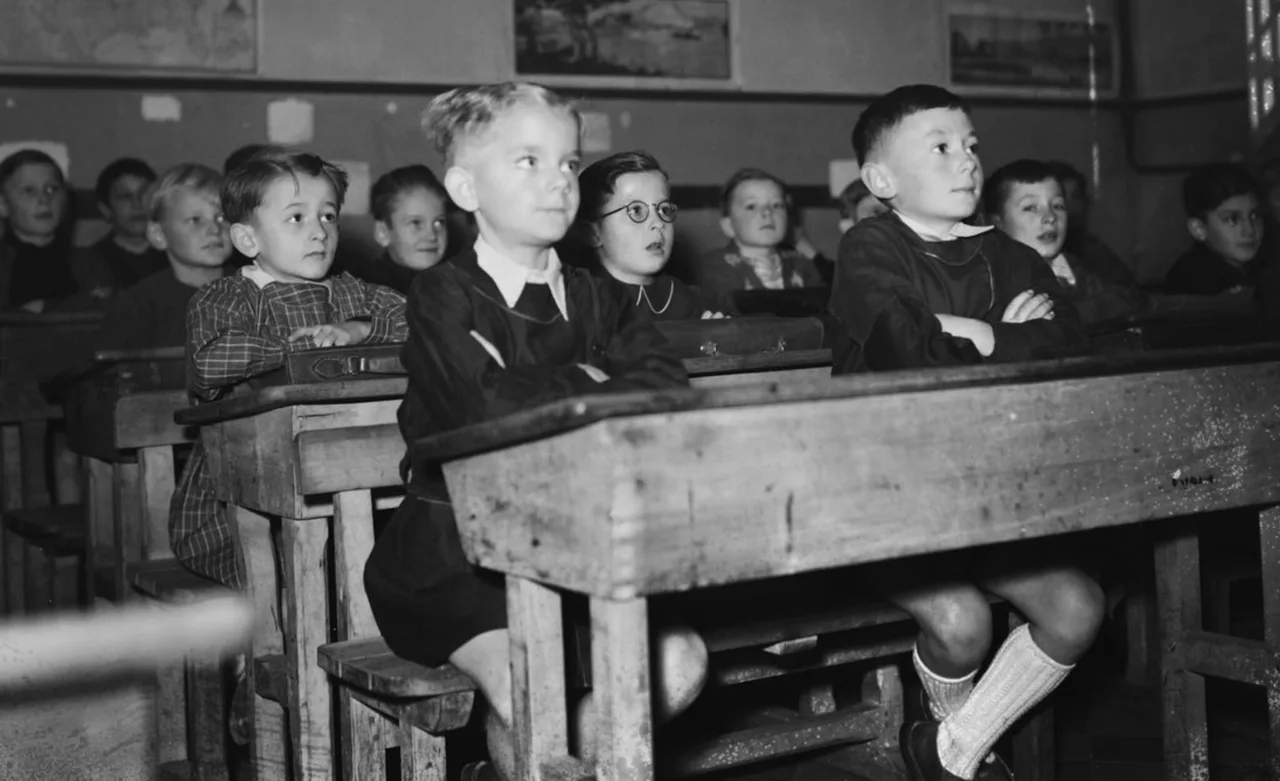
In Montreal during the Second World War, schools stayed open, since the city was not touched by direct fighting, and the education system suffered neither destruction nor major disruption. But that did not mean complete stability. The war gradually crept into everyday life, and the school was one of the places where this was felt most. The usual rhythm of classes was punctuated by school alerts, civil defence instructions and the requirement to black out the premises in the evening.
Pupils learned to respond to signals, to follow instructions with discipline and to organize themselves quickly: skills that, only a few years earlier, had seemed unnecessary.
These changes also affected the atmosphere inside the school. Teachers spoke more often about responsibility, duty, thrift and moderation. Even the youngest pupils gradually got used to the new conditions: alongside arithmetic and reading, there was talk of military service, the front and the losses. The school was no longer a space sealed off for childhood and became an integral part of a great social mobilization.
At the same time, Montreal remained a city marked by a clear linguistic and cultural divide, one that was especially noticeable at school. English-speaking Protestant schools embraced the rhetoric of war far more actively: they stressed the bond with Great Britain, spoke of a "common struggle" and organized fundraising drives to support the army. For many pupils, this created a sense of belonging to a great mission.
In French-speaking Catholic schools, the situation was more complex. Although support for the soldiers and compassion for the victims of the war were beyond question, the general tone remained more cautious. The war was not seen as "theirs", and the issue of compulsory conscription caused tension, and even distrust of the federal government. For Montreal, between 1942 and 1944, it was one of the main political issues, dividing families and social classes.
In the classroom, this did not show itself in open protest, but rather in a certain restraint, fewer patriotic symbols and a more neutral presentation of events. It is known that in English schools, portraits of King George VI hung above the blackboards, while French schools displayed religious symbols.
As a result, the same school system seemed to exist in two parallel dimensions. On paper, the same lessons, the same textbooks, the same timetables. But in terms of atmosphere and meaning, two different experiences of childhood. For some, the war became a story of duty and commitment; for others, a source of anxiety and cautious detachment. And it was precisely this invisible difference that largely determined how Montreal's children lived through the war years.
The war economy and social mobilization through the school
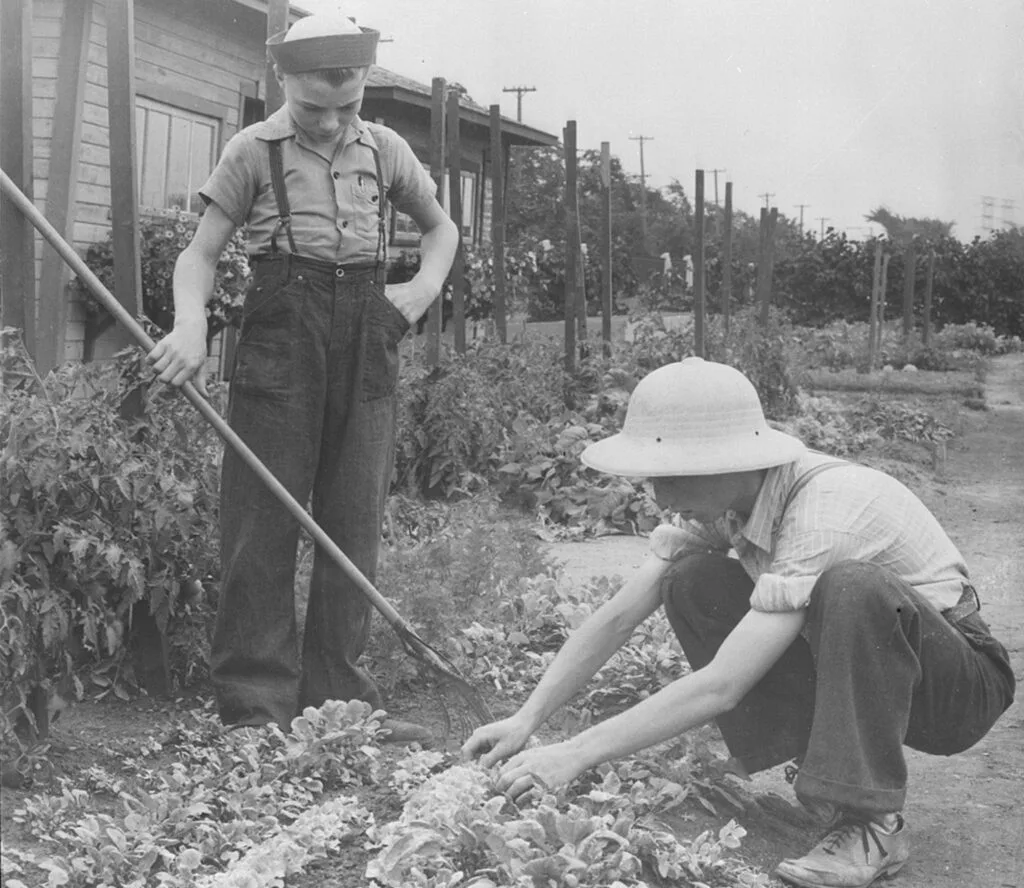
During the Second World War, the school curriculum in Montreal gradually evolved, not formally, but in content and direction. Teaching became more practical and suited to the needs of the time. Mathematics, technical knowledge and the basic sciences were no longer presented as abstractions, but as tools useful in everyday life. Manual work took on new importance: pupils were taught to make repairs, work with materials and understand simple manufacturing processes.
Subjects related to home economics played a special role. Home economics classes covered the sensible use of food, substitutes for scarce ingredients and cooking under restrictions. It was no longer simply a "school subject", but rather preparation for real life, where every resource counted.
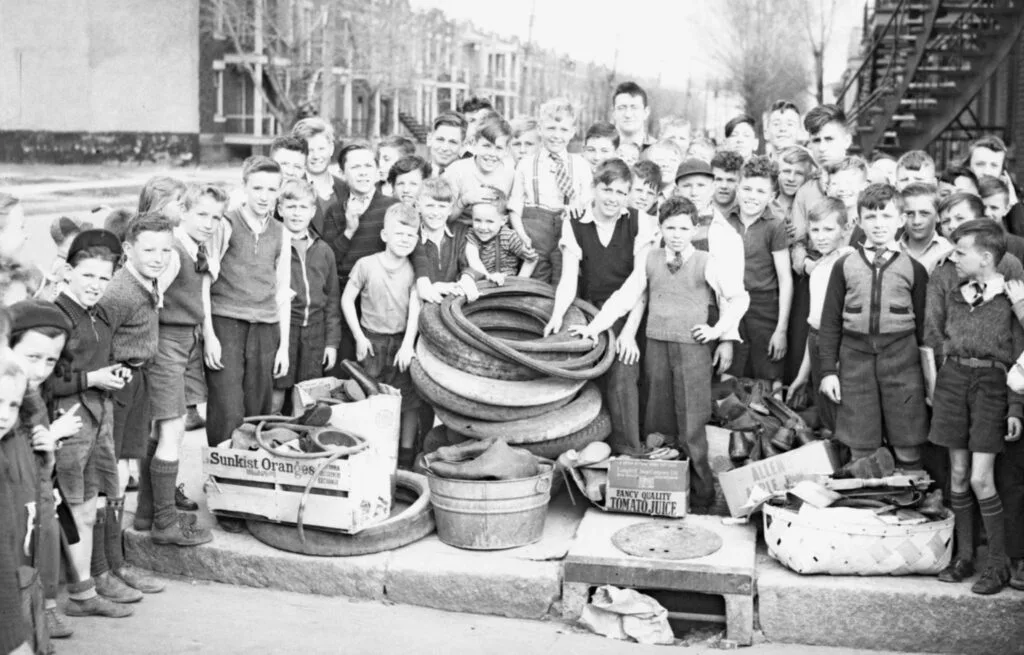
Learning, however, was not limited to the classroom. Pupils were actively involved in initiatives that directly supported the home front. Schoolchildren collected scrap metal, rubber and paper: anything that could be recycled for the needs of industry. They organized fundraising drives, bought war bonds and took part in volunteer efforts. Children wrote letters to soldiers, packed care parcels and joined local support campaigns.
The "Victory gardens" also deserve a mention. Many Montreal schools turned their yards into vegetable gardens where children grew vegetables. It was a very powerful visual symbol of the era.
These practices had a twofold effect. On the one hand, they gave a sense of belonging: even the youngest could make their contribution. On the other, they instilled a sense of discipline, responsibility and collective action. Taking part in these initiatives was seen as an integral part of learning, not as something outside it.
In the end, the school went far beyond its traditional role. It did not merely pass on knowledge, but also shaped behaviour, attitudes and readiness to act in wartime. It was precisely through these everyday practices that the education system became an essential tool for mobilizing society.
School meals in wartime: scarcity and thrift
During the Second World War, even the school cafeteria in Montreal stopped being a familiar part of childhood. Pupils' daily lives were shaped by the general economic reality of the war: food shortages, supply restrictions and the rationing system gradually changed what children saw on their plates.
The menu became simpler and more predictable. Less meat, less sugar, fewer products considered "non-essential" in a war economy. Meals were often built around basic, accessible ingredients: grains, vegetables, simple soups. What might once have been seen as an ordinary choice was now dictated by the availability of products and government restrictions.
The rationing system affected not only schools but also pupils' families, so children came to class already familiar with thrift at home. This created a new norm of perception: restrictions no longer seemed an exception and had become part of everyday life. Even school meals reflected the general idea of using resources wisely: nothing superfluous, nothing excessive.
This sometimes went hand in hand with replacing familiar products with affordable alternatives. Where imported or expensive ingredients had been used before (for example, refined sugar, white bread or citrus fruit), local and seasonal options now appeared: beets instead of sweeteners, rye or mixed bread instead of white bread, apples and root vegetables instead of oranges and lemons. Pupils were taught that food was not just a comfort, but also part of the common war effort.
In this context, schoolchildren were often given fish oil or extra rations of milk to make up for deficiencies in other vitamins. This measure was part of a national program aimed at safeguarding the health of the next generation.
In the end, the school meal in Montreal at that time became one more part of a vast system of adaptation.
The Montreal school as a mechanism of adaptation
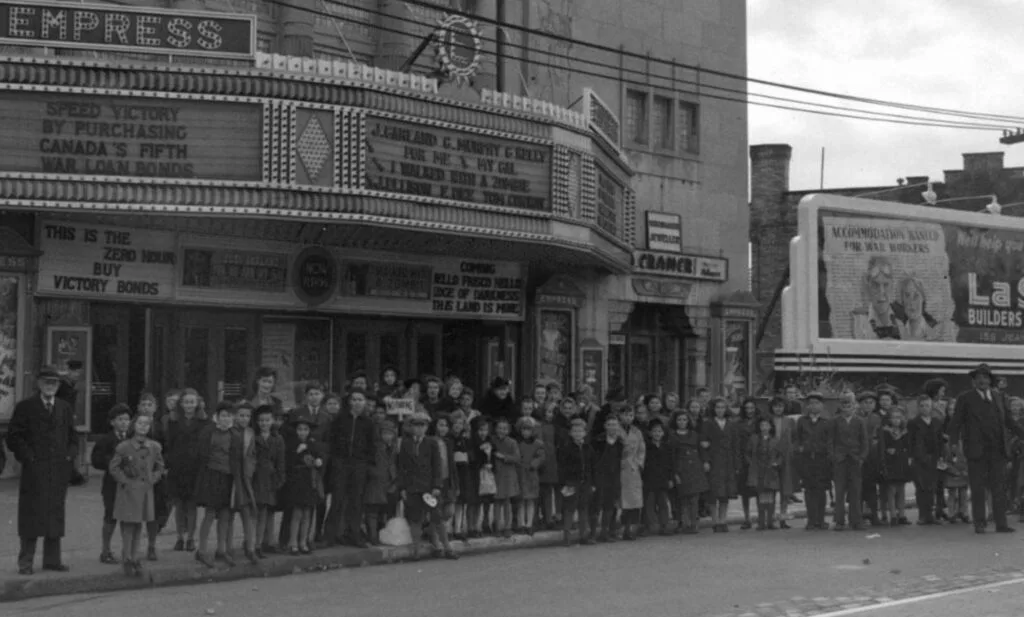
In short, it can be said that the school in Montreal was not destroyed during the Second World War: it adapted. Teaching became less theoretical, with more practice, discipline and participation in collective life. At the same time, Quebec's local identity had a strong influence, making this experience different from what was happening in other parts of Canada.
Sources:
- https://wartimecanada.ca/fr/essay/sinstruire/leducation-pendant-la-seconde-guerre-mondiale
- https://ici.radio-canada.ca/ohdio/premiere/emissions/aujourd-hui-l-histoire/segments/entrevue/425610/ecole-historique-montreal-quebec-divergences
- https://ville.montreal.qc.ca/memoiresdesmontrealais/lenfance-et-leffort-de-guerre-en-1942
- https://thecanadianencyclopedia.ca/fr/article/les-enfants-canadiens-pendant-la-deuxieme-guerre-mondiale-1